
Views: 0 Author: Site Editor Publish Time: 2025-10-15 Origin: Site
If you want strong, reliable results in woodworking projects, you should choose a wood screw. The best screw for your project depends on your wood type and what you plan to build. When you pick screws, think about these important features:
Head type affects how the screw sits in the wood.
Drive type makes installation easier.
Material and coatings boost strength and durability.
Thread design helps with grip and penetration.
Check out how the wood screw market has changed:
Factor Influencing Sales Trends | Description |
|---|---|
DIY Market Growth | More people tackle home projects, so demand for quality screws rises. |
Technological Advancements | New designs make screws work better in wood. |
Sustainable Practices | Eco-friendly screws are now popular choices. |
This guide will help you feel confident when selecting screws for your next project.
Pick the right screw for your wood and project. This helps make strong joints and stops damage.
Look at screw features like head type, drive type, and material. These things make installation easier and help screws last longer.
Drill pilot holes in hardwood and engineered boards every time. This stops the wood from splitting and makes screws go in easier.
Use corrosion-resistant screws for outdoor jobs. This keeps away rust and helps your work last longer.
Match screw size and gauge to your project. The right size stops problems and makes your work look better.
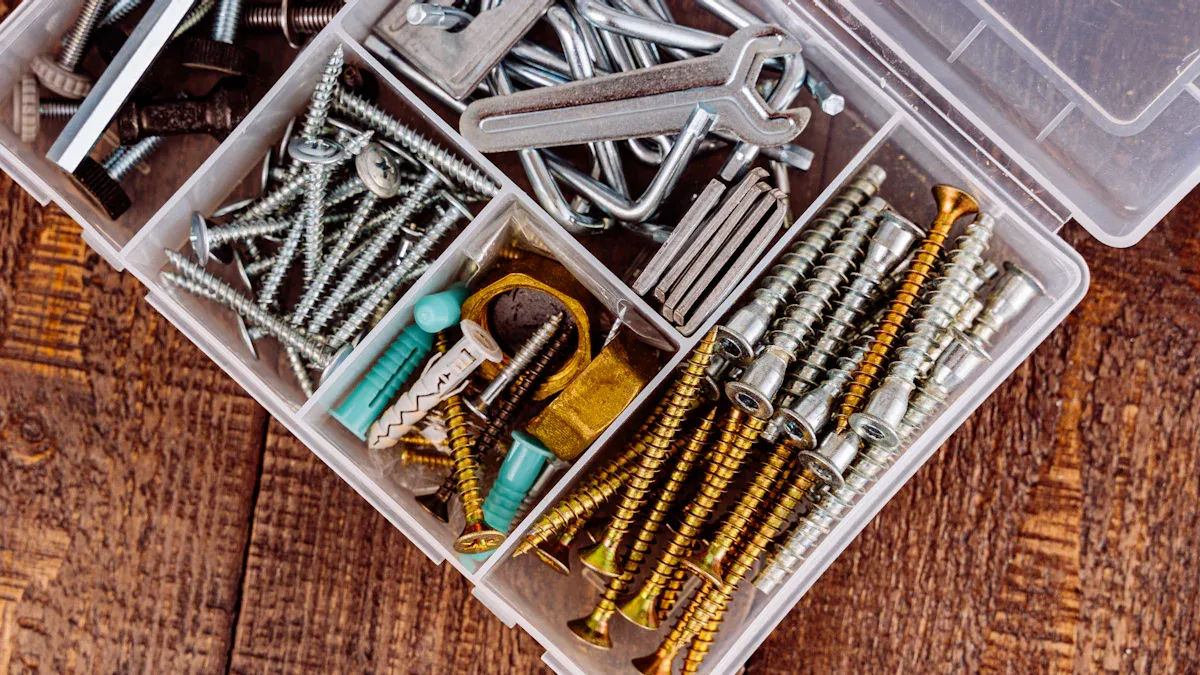
When you start a woodworking project, you face many screw types. Each type works best for certain jobs. Let’s break down the main options so you can pick the right one.
Tip: Choosing the right screw type makes your project stronger and easier to finish.
Here’s a table showing popular wood screw types and their uses:
Type of Screw | Description | Applications |
|---|---|---|
Deck Screws | Made from corrosion-resistant materials, with larger heads and deeper threads. | Outdoor projects like decks and fences. |
Drywall Screws | Self-drilling and inexpensive, used for attaching drywall panels. | Simple indoor projects, not for heavy-duty use. |
Standard Wood Screws | Commonly used, available in many lengths and gauges. | General woodworking, furniture, cabinets. |
Lag Screws | Thick threads, hexagonal heads, need more torque. | Heavy boards, structural connections. |
Pocket Screws | Designed for pocket hole joinery, self-drilling tips, larger heads. | Joints under stress or vibration. |
Structural Screws | Larger than standard screws, strong fastening. | Decks, playgrounds, high-risk areas. |
You see standard wood screws in most woodworking projects. These screws come in many sizes and gauges. You can use them for furniture, cabinets, and general repairs. They work well for non-structural tasks.
You get reliable holding power.
You can use them in many different projects.
You install them easily with basic tools.
Sometimes, you need to be careful. Thin wood can split if you drive the screw too fast. Hardwoods may need a pilot hole to prevent damage.
If you want high-quality standard wood screws, I recommend checking out our selection at Ningbo Donghuang Hardware Co., Ltd. We offer a wide range of wood screw options, including various sizes and finishes. You can find more details in our wood screw product category.
Specialty woodworking screws give you extra benefits for special jobs. You might need more strength, better looks, or extra protection from rust.
Steel wood screws give you strength and durability. Many have zinc coatings to fight rust.
Stainless steel wood screws resist corrosion. You can use them outdoors or in damp places.
Brass wood screws look great in cabinets and antique furniture. They add style but are less strong than steel.
Bronze wood screws offer better corrosion resistance than brass. You see them in outdoor and marine projects.
You can find specialty woodworking screws for every need. At Ningbo Donghuang Hardware Co., Ltd., we provide options like stainless steel wood screws and brass wood screws. These screws help you tackle tough jobs or add a decorative touch.
Note: Always match your screw type to your project. Outdoor work needs corrosion resistance. Furniture may need a decorative finish.
Now you know the main wood screw types. You can choose the best one for your next woodworking project.
When you pick screws for woodworking, look at a few main things. These details help you get good results for your project.
Wood screws have different drive types. Each type has its own good points.
Phillips and square drives work for most jobs. You can use them for many tasks. They are strong and easy to use.
Torx and hex drives give more grip and power. These are best for tough or big projects.
Security drives stop people from messing with screws. You might use these for special furniture or cabinets.
Here is a simple comparison:
Drive Type | Ease of Use | Durability | Cost |
|---|---|---|---|
Phillips | Easy to use but slips sometimes | Can strip more easily | Usually the cheapest |
Square Drive | Fits tightly | Lasts longer | Costs a bit more |
Torx | Best grip and power | Very strong | Most expensive but works best |
Tip: Torx screws go in faster and make fewer mistakes. You can use impact drivers for more power. This helps when you use long screws.
The screw head shape changes how it sits in wood. It also affects how your project looks.
Head Type | Description | Preferred Scenario |
|---|---|---|
Flat-head | Fits flat for a smooth look | Hinges, flat surfaces |
Round-head | Has a round top and flat bottom | Good for general wood jobs |
Oval-head | Sticks out a little, looks nice | Adds style and holds things |
Truss-head | Big, flat oval head, holds well | Used for slide drawers |
Washer-head | Has a washer built in, stops sinking | Great for power tools |
Pick the head shape that fits your project. Flat-head screws are best for smooth surfaces. Oval-head screws look nice and add style.
Screw size is important for strength and safety. Match the gauge and length to your wood and project.
Longer screws hold better. They grip more wood and do not pull out easily.
Thicker screws hold tight, especially for heavy parts.
If screws are too long or thick, wood can split. This happens more in hard wood or near edges.
Drill pilot holes to stop splitting, especially with big screws.
Here are some common screw sizes for furniture:
Screw Size | Common Uses | Notes |
|---|---|---|
#6 x 1" | Light jobs, trim, hinges | Good for inside use, needs less force |
#8 x 1-1/4" | Cabinets, furniture | Popular for joining wood inside |
#10 x 1-1/2" | Drywall, heavy frames | Holds strong without breaking studs |
Note: Always check screw size and length before you start. If you want good screws, Ningbo Donghuang Hardware Co., Ltd. has many choices for woodworking.
When you pick screws for woodworking, think about what they are made of and their coatings. These things help your project last longer. They also protect against rain or wet places. Let’s see the most common choices.
There are three main screw materials for woodworking. These are steel, brass, and stainless steel. Each has its own good points.
Material | Corrosion Resistance | Suitable Applications |
|---|---|---|
Steel | Moderate | Indoor and outdoor use |
Stainless Steel | High | Outdoor and marine applications |
Brass | High | Decorative and electrical projects |
Aluminum | High | Outdoor applications in various industries |
Steel screws are strong and work for most indoor jobs. They come in many sizes. Stainless steel screws do not rust easily. You can use them outside for decks or fences. Brass screws look nice in cabinets or old furniture. They also fight rust, so they are good for electrical work. Always check the screw diameter. Make sure it fits your wood and is strong enough.
Tip: Use exterior-rated screws for outdoor jobs. This stops rust and stains.
Here’s a quick look at how strong screws are:
Screw Type | Tensile Strength | Withdrawal Resistance | Shear Resistance |
|---|---|---|---|
Traditional Screws | Low | Moderate | Moderate |
Self-Tapping Screws | High | High | Moderate |
If you want good screws, Ningbo Donghuang Hardware Co., Ltd. has many choices. They offer different materials and diameters for any project.
Coatings help screws last longer and stop rust. You can pick from many types, and each has its own use.
Zinc-plated screws are cheap and good for inside. They do not work as well outside.
Bronze 3x coating gives the best protection. It is great for treated wood.
Epoxy coatings cover the screw and last a long time outside.
PrimeGuard® coatings mix zinc and epoxy for strong protection.
Ceramic coatings stop water and scratches. They are good for roofs or outdoor wood.
Coating Type | Description | Effectiveness in Environments |
|---|---|---|
Zinc | Used for outside screws, comes in two types | Thin layers do not work well in tough weather |
Epoxy | Plastic-like cover that stops rust | Good for long use outside if not damaged |
PrimeGuard® | Special coating with zinc and epoxy | Lasts up to 10 years, fights rust well |
Bronze 3x | Made for top rust protection and ACQ wood | Works inside and outside |
Ceramic | Stops water and scratches | Good for roofs and outside wood |
Coated screws last longer than plain ones, especially outside. They fight rust and keep your project strong. If you use the right size and coating, your work will last for years.
Note: Coated screws help the planet by making less waste. They also keep your wood safe from stains and harm.
Ningbo Donghuang Hardware Co., Ltd. sells screws with strong coatings and many sizes. You can use them for both inside and outside wood projects.
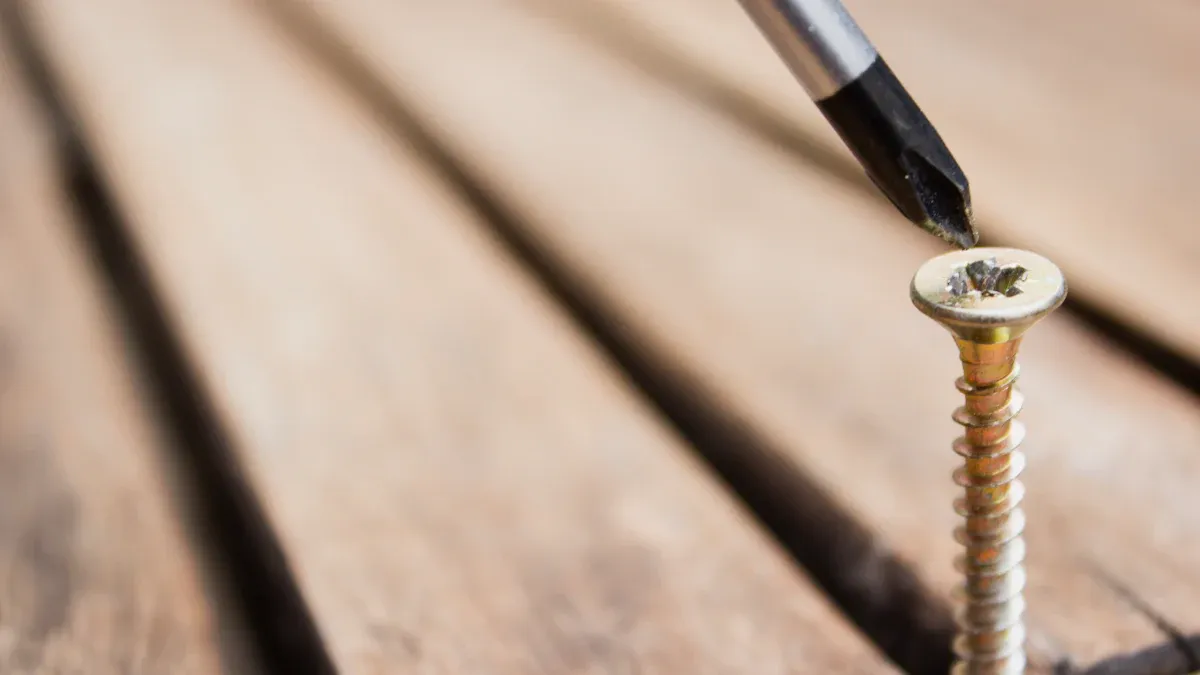
Choosing the right fastener can make or break your woodworking project. You want strong joints, a clean finish, and no split wood. Let’s walk through how you can master selecting the right screw for every job.
You’ll notice that different woods need different screws. Softwoods like pine or cedar have loose fibers. Hardwoods such as oak or maple are dense and tough. Picking the right wood screw for each type helps you avoid problems like splitting or loose joints.
Here’s a handy table to help you compare options:
Wood Type | Recommended Screw Type | Features | Best For | Tips & Notes |
|---|---|---|---|---|
Softwood | Coarse Thread Wood Screws | Deep threads, better grip in loose fibers | General softwood construction | Great for pine, cedar; no need for pre-drilling |
Softwood | Self-Tapping Screws | Cuts its own thread into wood | Fast installation in softwood | Use low-speed drill to prevent overdriving |
Softwood | Bugle Head Drywall Screws | Wide head, prevents pull-through | Paneling, framing | Avoid splitting by using gentle force |
Softwood | Deck Screws | Corrosion-resistant, sharp point | Outdoor projects | Pick coated types for weather resistance |
Hardwood | Fine Thread Wood Screws | Tighter threads for dense grain | Cabinets, flooring, furniture | Always pre-drill to prevent splitting |
Hardwood | Torx Drive Screws | Torx head, better torque | High-stress joints | Use matching Torx bit for best results |
Hardwood | Lubricated/Wax-Coated Screws | Coating reduces friction | Flooring, heavy-duty joints | Pre-drill even with coated screws |
You want coarse threads for softwood. These grip better and go in smoothly. For hardwood, fine threads work best. They hold tight and resist loosening. Always drill pilot holes in hardwood. This stops the wood from splitting and makes driving easier.
Torque matters, too. Softwood needs lower torque. Hardwood requires higher torque. If you use a power drill, adjust the setting to match the wood type.
Plywood and MDF are popular in furniture and cabinetry. These materials have special needs. MDF is brittle and splits easily. Plywood can delaminate if you use the wrong screw.
Check out this table for quick guidance:
Material | Recommended Screw Type | Key Features |
|---|---|---|
MDF | Chipboard Screws | Coarse threads, thinner core to prevent splitting |
Plywood | Wood Screws | Coarse threads, grip layers without delamination |
Plywood | Drywall Screws | Good for light-duty tasks, can snap under load |
When you work with MDF, use chipboard screws. These have a thinner core and coarse threads. They reduce the risk of splitting. For plywood, wood screws with coarse threads work well. They grip the layers and keep everything tight. Drywall screws are okay for light jobs, but they can snap if you use them for heavy loads.
Both MDF and plywood benefit from pilot holes. Drill a small hole before driving the screw. This helps prevent splitting and keeps the screw straight.
You want your project to last. Here are some tips to help you pick the best wood screw every time:
Match the screw to the material. Use coarse-thread screws for softwood, fine-thread for hardwood, and self-drilling for engineered boards.
Consider the environment. For outdoor projects, pick corrosion-resistant screws like deck screws.
Think about the finish. Raised head or round head screws add a decorative touch to furniture.
Check the size. Make sure the screw is long enough to hold boards securely, but not so long that it pierces through. Use a screw size chart to compare options.
Gauge matters. Choose screws thick enough to grip without splitting the wood. Refer to a screw size chart for guidance.
Always drill pilot holes in hardwood and engineered boards. This prevents splitting and makes driving easier.
Use the right drive type. Square or star drives give you better torque control, especially in tight spaces.
Source your screws from trusted manufacturers like Ningbo Donghuang Hardware Co., Ltd. High-quality screws mean reliable performance.
Tip: Consistent threading and a centered tip help screws drive smoothly and hold tight.
You want strong, durable joints. Here’s how you can get them:
Drill pilot holes in hardwood, MDF, and plywood. This prevents splitting and keeps screws straight.
Use the right torque setting. Lower torque for softwood, higher for hardwood. This keeps the screw from stripping or breaking.
Pick the right screw size. Use a screw size chart to find the best length and thickness for your project.
Avoid overdriving. Stop when the screw head sits flush with the surface.
Use coated or stainless steel screws for outdoor or damp environments. This prevents rust and keeps joints strong.
Note: If you want a clean finish, countersink the screw head. This lets you fill the hole and sand it smooth.
You can make every project stronger and more reliable by following these steps. Selecting the right screw is easy when you know what to look for. Use the tables and tips above to guide your choices. If you need help, Ningbo Donghuang Hardware Co., Ltd. offers a wide range of wood screw options and expert advice.
When you pick screws for your woodworking project, you want everything to hold tight and look great. Sometimes, small mistakes can lead to big problems. Let’s look at the most common errors and how you can avoid them.
Choosing the wrong screw size or type can ruin your project. You might think any screw will work, but that’s not true. The wrong screw can make joints weak, split the wood, or even cause safety issues.
Here’s a quick table showing what can go wrong:
Mistake | Consequence |
|---|---|
Choosing the Wrong Type of Screw | Weak connections, material damage, project failure. |
Using the Incorrect Screw Size | Structural instability, aesthetic issues, safety hazards. |
Over-Tightening or Under-Tightening | Stripped threads, damaged screw heads, cracked materials. |
Ignoring Load-Bearing Capacity | Failure, instability, safety hazards due to inadequate support for weight. |
You might notice these problems if you use the wrong screw:
Weak joints that wobble or break.
Stripped threads that won’t hold.
Cracked or split wood.
Unsafe construction that could fail.
If you want strong, secure joints, always match the screw size and type to your wood and project. The right screw makes your work last longer and look better.
You might think driving a screw in tight is best, but too much force can split the wood or strip the screw head. This happens a lot with softwoods and engineered boards.
The last little oomph can cause a wood split, especially in softwoods and softer hardwoods. Instead, find the appropriate clutch setting on your drill/driver to avoid overtightening screws.
To prevent stripping screws, try these tips:
Use the correct bit size for your screw.
Replace worn-out driver bits.
Apply steady pressure when driving.
Drill a pilot hole before installing the screw.
Use a bit holder for better control.
Choose Torx construction screws for extra grip.
If you follow these steps, you’ll avoid stripped screws and split wood. Your project will stay strong and look professional. For reliable wood screws, Ningbo Donghuang Hardware Co., Ltd. offers a wide range of options to help you get the job done right.
Picking the right wood screw helps your project stay strong. It also makes building easier. You should think about the screw type, size, and what it’s made of. Do this before you begin working. Here is a simple chart to help you remember:
Screw Type | Best For | Key Feature |
|---|---|---|
Countersunk Wood Screw | Furniture, cabinetry | Lays flat for a neat finish |
Pocket-Hole Screw | Hidden joints | Big head gives tight grip |
Stainless Steel Screw | Outdoor projects | Stops rust and keeps strong |
MDF/Particle Board Screw | Engineered boards | Special threads stop wood from splitting |
Many experts like coated screws for softwood. Stainless steel screws are great for outdoor work. Use these ideas to make your projects better. If you want good screws, ask a trusted company like Ningbo Donghuang Hardware Co., Ltd.
Wood screws have sharp points and deep threads. You get better grip in wood. These features help you avoid splitting and make your joints stronger.
Pick a screw that goes at least halfway into the bottom piece. For most projects, use screws that are 1.5 to 2 times the thickness of the top board.
You should drill pilot holes in hardwood and engineered boards. This step helps prevent splitting and makes driving screws easier.
Use corrosion-resistant screws like stainless steel or coated deck screws. These options protect against rust and keep your outdoor projects strong.
You can find reliable wood screws at Ningbo Donghuang Hardware Co., Ltd. Their catalog offers many sizes, materials, and coatings for all woodworking needs.


