
Views: 0 Author: Site Editor Publish Time: 2025-10-03 Origin: Site
You need to understand wood screw sizes before starting any woodworking project. The size describes the gauge (thickness), length, and thread type. Gauges usually range from 2 to 20, and lengths go from 1/2 inch up to 6 inches. The table below shows the most common gauges and their closest fractional diameters:
Screw Size | Closest Fractional Size (diameter in inches) |
|---|---|
2 | 3/32″ |
4 | 7/64″ |
6 | 9/64″ |
8 | 5/32″ |
10 | 3/16″ |
12 | 7/32″ |
Choosing the right wood screw helps you create strong and safe joints. Studies show that correct screw spacing and sizing prevent loose or weak connections.
Understand wood screw sizes by checking gauge, length, and thread type. This knowledge ensures strong and safe joints in your projects.
Choose the right screw length based on your wood thickness. A screw should go at least halfway into the bottom piece for a secure hold.
Select the appropriate gauge for your wood type. Softer woods need thinner screws, while harder woods require thicker screws for better grip.
Use stainless steel or coated screws for outdoor projects to prevent rust. This choice enhances the durability of your work.
Always drill pilot holes in hardwoods to prevent splitting. This simple step makes driving screws easier and protects your materials.
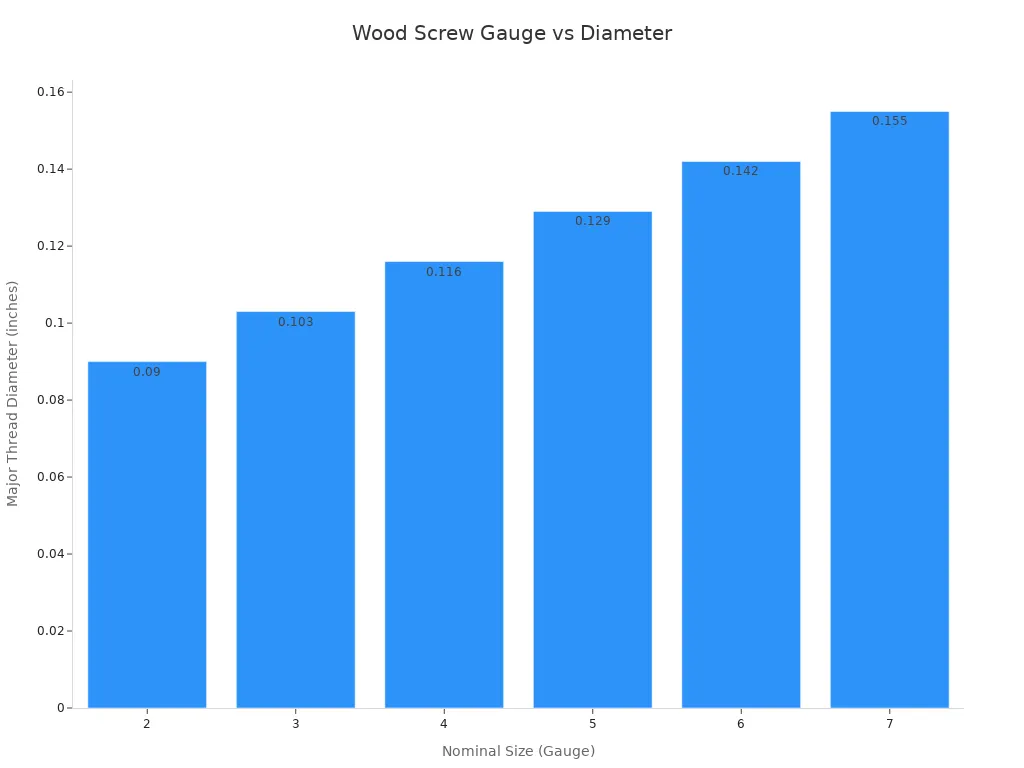
You need to know the gauge and diameter before choosing a wood screw. The gauge tells you the thickness of the screw. The diameter measures how wide the screw is. You can find these numbers in standard charts. Here is a table that shows the most common wood screw gauges, their threads per inch, and their major thread diameters:
Nominal Size (Gauge) | Threads Per Inch | Major Thread Diameter (inches) |
|---|---|---|
2 | 26 | 0.090 |
3 | 24 | 0.103 |
4 | 22 | 0.116 |
5 | 20 | 0.129 |
6 | 18 | 0.142 |
7 | 16 | 0.155 |
You can see that as the gauge number goes up, the screw gets thicker. The diameter helps you match the screw to the strength you need for your project. If you want a visual guide, look at this chart:
Tip:
Always check the gauge and diameter before you buy wood screws. This helps you avoid using a screw that is too thin or too thick for your material.
Screw length is another important factor. You measure screw length from the tip to the bottom of the head. Most wood screws range from 1/2 inch to 6 inches long. You need to pick a screw length that fits your project. If you use a screw that is too short, it will not hold well. If you use a screw that is too long, it might poke through the other side of the wood.
Here is a quick guide to common screw lengths for wood screws:
Gauge | Common Screw Lengths (inches) |
|---|---|
4 | 1/2, 3/4, 1, 1-1/4 |
6 | 3/4, 1, 1-1/4, 1-1/2, 2 |
8 | 1, 1-1/4, 1-1/2, 2, 2-1/2 |
10 | 1-1/2, 2, 2-1/2, 3 |
12 | 2, 2-1/2, 3, 4 |
Note:
You should choose a screw length that lets the screw go at least halfway into the bottom piece of wood. This gives you a strong hold.
You will find many wood screw sizes in stores. Most projects use screws between #6 and #10 gauge, with lengths from 1 inch to 3 inches. These sizes work well for furniture, cabinets, and general repairs.
Here is a table that helps you match screw type and size to your material:
Material | Recommended Screw Type | Size Range (Common) | Notes |
|---|---|---|---|
Wood | Wood screws with coarse threads | #6 to #10, 1"–3" | Use longer screws for heavy loads. Pre-drill in hardwood. |
Drywall | Drywall screws | #6 to #8, 1-1/4"–2" | Use anchors for heavy items. |
Metal | Self-tapping screws | #8 to #14 | Use fine threads for thin metal. |
Concrete/Brick | Masonry screws | 1-1/4"–3" | Use anchors for best grip. |
Plastic/Composite | Coarse-thread screws | #6 to #10 | Go slow to avoid cracks. |
When you look at a wood screw size chart, pay attention to these points:
Head size tells you what kind of driver you need.
Diameter shows how strong the screw is.
Screw length tells you how deep the screw will go.
Thread pitch helps you know how well the screw will grip the wood.
If you follow these tips, you will pick the right wood screw for your project every time.
You need to select the right screw length for your project. The thickness of your wood pieces guides this choice. If you use a screw that is too short, the joint will be weak. If you use a screw that is too long, it may poke through the wood or split it.
Here are some rules of thumb for choosing screw length:
Application | Recommended Screw Length |
|---|---|
Attaching two boards across the grain | Shorter screw |
Inserting into end grain | At least 2 inches of thread |
Basic tasks (¾-inch boards) | 1¼-inch screw |
End grain connections | 2½-inch utility screws |
2x boards into end grain | 3-inch screw |
Tip:
Always check the thickness of both wood pieces before you choose a wood screw. For most basic tasks, a 1¼-inch screw works well with ¾-inch boards. If you join end grain, use longer screws for better grip.
You should also consider the application thickness. This helps you select the right screw length for wood screw strength. Longer screws work best for load-bearing connections. Pre-drilling in hardwood prevents splitting and makes installation easier.
The gauge measures the thickness of the screw. You need to match the gauge to the wood type and the project. Softer woods need higher gauge screws, which are thinner. Harder woods need lower gauge screws, which are thicker.
Specification | Description | Best Use |
|---|---|---|
Gauge | Thickness of the screw | Higher gauge for softer woods, lower for harder woods |
Length | Measurement from head to tip | Depends on project requirements |
Threads | Coarse for softwoods, fine for hardwoods | Coarse for plywood and softwoods, fine for hardwoods |
If you use coarse threads, you get better grip in softwoods and plywood. Fine threads work best in hardwoods. Ribbed points on screws help reduce splitting, especially in delicate wood species. You should always match the screw gauge and thread type to your material for a strong and safe connection.
Note:
Drilling pilot holes before driving screws helps prevent splitting. Blunting the tip of the screw also reduces sharp penetration and protects wood fibers.
You may need long wood screws for heavy-duty or structural projects. These screws join thick or heavy pieces of wood together. You find them useful in deck building, framing, or attaching large beams.
Long wood screws provide extra holding power for load-bearing joints.
You should predrill holes before installation to prevent splitting and ensure a straight path.
You can buy these screws at most hardware stores.
Long wood screws usually cost less than specialized structural fasteners.
When working with long wood screws, you need to use proper techniques. Drill pilot holes to guide the screw and reduce the risk of splitting. Blunt the tip of the screw if you work with softwoods. This helps protect the wood fibers and keeps your project strong.
Tip:
If you want maximum wood screw strength, use a ¼-inch lag screw for sheer strength. Keep some 2½-inch utility screws on hand for end grain connections.
Choosing the right wood screw size makes your project safer and more durable. You improve the quality of your work by matching screw length and gauge to your materials and using smart installation techniques.
There are different materials for wood screws. Each one has its own good points. Here is a table that lists the most common types and what they are best for:
Material | Advantages |
|---|---|
Steel | Strong and tough; often has zinc to stop rust. |
Stainless Steel | Does not rust or corrode; great for outside jobs. |
Brass | Looks nice; used in cabinets and old furniture. |
Bronze | Resists rust better than brass; good for outdoor and boat use. |
Steel screws are good for most jobs inside. Stainless steel screws do not rust, so use them outside or in wet places. Brass screws look pretty in furniture and cabinets. Bronze screws last longer in wet or salty places.
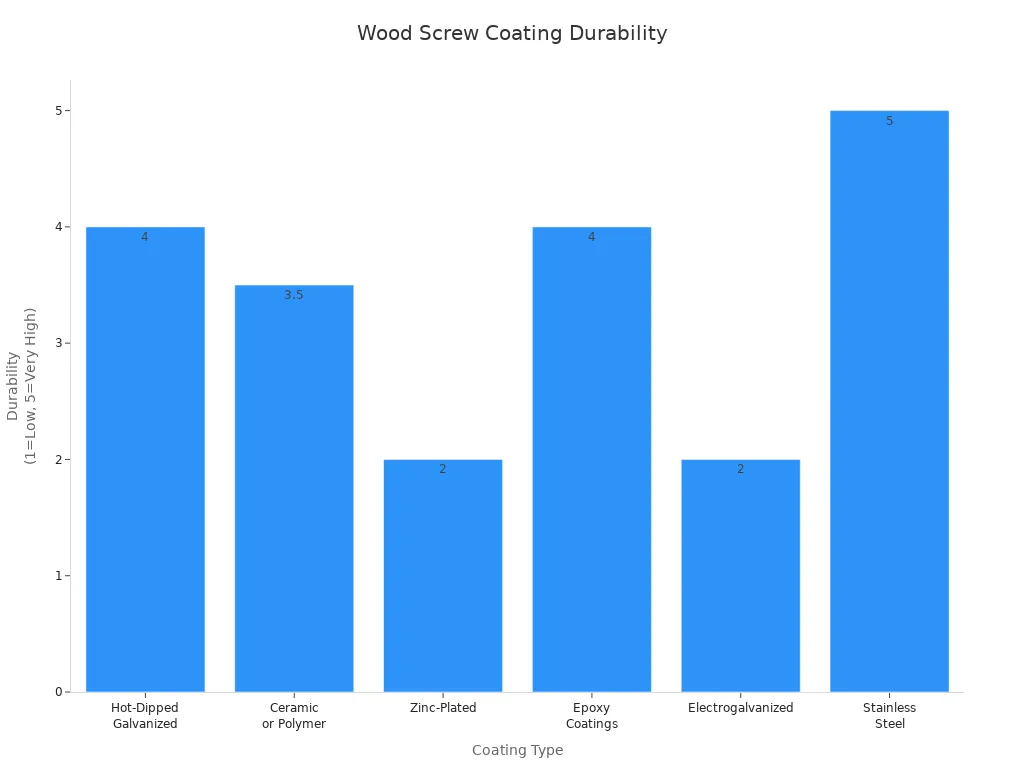
Coatings help wood screws last longer, especially outside. Different coatings make screws stronger against rust. This table shows how each coating works:
Coating Type | Description | Durability Level |
|---|---|---|
Hot-Dipped Galvanized | Thick zinc layer for strong rust protection. | High |
Ceramic or Polymer Coating | Stops rust, used on deck screws. | Moderate to High |
Zinc-Plated | Good for light outdoor use, not as strong as galvanized. | Low to Moderate |
Epoxy Coatings | Protects from rust, used for deck screws. | High if not damaged |
Electrogalvanized | Thin layer, cheaper, can rust over time. | Low to Moderate |
Stainless Steel | Best for all weather and lasts longest. | Very High |
Tip: Use stainless steel or hot-dipped galvanized screws for decks, fences, and outdoor furniture.
Pick the right screw material and coating for where you will use it. For inside, steel or brass screws are fine. For outside, pick stainless steel or coated screws to stop rust. Here is a quick guide:
Criteria | Indoor Use | Outdoor Use |
|---|---|---|
Corrosion Resistance | Not very important, regular screws are okay | Must be high to handle rain and weather |
Material Choice | Steel and other common metals work | Stainless steel or coated screws are better |
Coatings | Little or no coating needed | Need coatings to stop rust |
Length | Depends on what you build | Should fit outdoor needs |
Gauge | Regular sizes usually work | Thicker screws may be needed |
Additional Features | Basic screws are enough | Self-drilling tips can help |
Think about your budget and if you need rust protection.
Make sure to use strong screws if safety is important.
Ningbo Donghuang Hardware Co., Ltd. makes strong wood screws in many sizes. Our factory uses modern machines and checks quality carefully. We have ISO9001, ISO14001, and IATF16949 certificates. You can count on our wood screws for furniture, building, and outdoor jobs.
You want your wood screws to fit your project perfectly. Here are some key tips to help you choose the right size:
Pick a screw length that reaches at least two-thirds into the bottom piece for strong holding power.
Select a thickness (gauge) that matches your wood type. Thicker screws hold better but can split thin boards.
Drill pilot holes in hardwoods to prevent splitting and make driving screws easier.
Use flat head screws for flush surfaces and pan head screws for extra grip.
When comparing long wood screws to shorter ones, remember that longer screws work best for heavy-duty tasks like deck building or framing.
Tip: Always check both the thickness and type of wood before choosing your screw size. This helps you avoid weak joints and damage.
Choosing the right material for your wood screws keeps your project strong and looking good. Use this table to guide your decision:
Screw Size | Common Uses | Notes |
|---|---|---|
#6 x 1" | Light-duty wood joinery, trim, hinges | Best for indoor jobs with less force needed |
#8 x 1-1/4" | Cabinets, furniture assembly | Great for most interior wood connections |
#10 x 1-1/2" | Drywall into studs, heavy frames | Strong hold without splitting studs |
#12 x 2" | Metal brackets, structural hardware | Use for added grip strength |
#14 x 2-1/2" | License plates, decking clips | Ideal for outdoor use with corrosion-resistant coatings |
You should match screw material to your project location. Use steel or brass for indoor work. Choose stainless steel or coated screws for outdoor projects to prevent rust.
Note: Manufacturers like Ningbo Donghuang Hardware Co., Ltd. provide detailed specifications and expert advice. You can contact their team for help with special requirements, such as matching DIN571 standards or selecting the best screw for your wood thickness and strength needs.
If you follow these tips, you will select wood screws that make your projects safer and more durable. For unique projects or professional advice, reach out to Ningbo Donghuang Hardware Co., Ltd. Their experience and quality standards help you achieve the best results.
Picking the right wood screw size and material makes your project strong and safe. You can stop weak joints and splitting if you follow expert advice, check size charts, and choose the right screw for your wood.
Make sure your screw goes at least halfway into the board.
Choose stainless steel or coated screws if you work outside.
Look at charts to help you pick the right screw.
If you have special needs, ask professional suppliers like Ningbo Donghuang Hardware Co., Ltd. They have the knowledge to help you get strong, high-quality fasteners every time.
You use long wood screws to join thick boards or heavy beams. These screws help you build decks, frames, and outdoor furniture. You get strong connections for load-bearing projects.
You pick long wood screws that reach at least two-thirds into the bottom piece. This gives you a secure hold. Measure your wood thickness before you buy screws.
You prevent splitting by drilling pilot holes before you drive long wood screws. You can also blunt the screw tip for softwoods. This keeps your wood safe.
You use long wood screws for outdoor jobs like fences and decks. Choose stainless steel or coated screws to stop rust. These screws last longer outside.
You find high-quality long wood screws from Ningbo Donghuang Hardware Co., Ltd. Their factory makes strong screws for furniture, building, and outdoor use. You get expert advice and reliable products.


