
Views: 0 Author: Site Editor Publish Time: 2025-12-17 Origin: Site
Self-Drilling Screws let you fasten materials without making a pilot hole first. These screws have a drill bit at the tip, so you can drive them straight into metal, wood, or plastic. You save time and effort because you do not need extra tools. Many builders and DIY fans choose these screws for projects like roofing and metalwork. If you want reliable options, check out the selection from Ningbo Donghuang Hardware Co., Ltd.
Self-drilling screws help you work faster. You do not need to make pilot holes first. The drill bit tips let you install them quickly. You can use them in many materials.
Picking the right head type and finish is important. It helps your project work well. Different styles fit different jobs. They also make things look better.
Use strong drills for the best results. Go at the right speed and use the right pressure. This stops mistakes and keeps the screws tight.
Self-drilling screws work in many ways. You can use them for building, metal work, or DIY jobs. They make work easier and help you finish faster.
Always pick the right screw size and material. Match them to what you need for your project. This makes sure your work lasts and holds together well.
The drill point is what makes Self-Drilling Screws special. The tip works like a tiny drill bit. It lets you put the screw right into metal, wood, or drywall. The shape of the tip helps the screw go in smoothly. If the tip is sharp, it goes in fast. If the tip is flat, you get more control. Drill flutes at the tip push chips out of the hole. This stops the screw from getting too hot. It also keeps the screw from breaking when you use it. The drill point’s length is important, too. A longer tip lets you use the screw in thick materials. This stops the threads from grabbing too soon. If the threads grab too early, the screw can stop or break. Some screws have wings on the tip. These wings make a bigger hole in thick materials. This keeps the threads from catching too soon and moving the screw out of place. There are different drill point types, like JT and JF. JT screws have a normal cutting edge. JF screws have a special tip that keeps them steady and fast in thin materials. The drill point design also helps the screw stay straight when you use it. If the tip is very centered, the screw fits tight and does not go crooked.
Self-Drilling Screws have many head styles for different jobs. Picking the right head type helps your project turn out better. Here is a table with some common head types and what they do:
HEAD STYLE | DESCRIPTION |
|---|---|
BUGLE HEAD | Used for plasterboard and heavy-duty decking |
BUTTON HEAD | Good clamping force for stitching thin steel |
COUNTERSUNK (CSK) HEAD WITH RIBS | For timber applications needing a flush finish |
COUNTERSUNK (CSK) HEAD NO RIBS | Used with pre-drilled steel |
FLAT HEAD / FLUSH HEAD | Low-profile for cladding and plasterboard |
HEX FLANGE HEAD | Versatile for roofing and timber fabrication |
PAN HEAD | General purpose for fixing thin steel to timber |
SELF EMBEDDING HEAD | For cladding like Cement Sheet, provides a flush finish |
TRIM HEAD | Used in decking to prevent timber splitting |
WAFER HEAD | Fixes lighter materials to steel or timber |
Ningbo Donghuang Hardware Co., Ltd. has Phillips Bugle Head and Hex Washer Head screws. The Phillips Bugle Head is good for drywall and decking. It gives a smooth look when finished. The Hex Washer Head is best for roofing and outside jobs. It gives extra grip and is easy to use with a wrench.
A screw’s finish keeps it safe from rust and damage. You want a screw that lasts, especially outside or in wet places. Self-Drilling Screws from Ningbo Donghuang Hardware Co., Ltd. come in yellow zinc and black phosphated finishes. Yellow zinc is thick and shiny. It stops rust, so it is good for wet or rough places. Black phosphated screws have a thin coat. They are good if you want to paint over them, like in cars or inside jobs. Some screws have EPDM sealing washers. These washers keep water out, which is great for roofs and outside work. You can pick sizes from M3 to M10, so you always have the right screw. Other finishes include zinc-plated steel for dry indoor use. Stainless steel is best if you need the most rust protection. Some screws have special coatings like Stalgard. These coatings give extra protection and a smooth look that does not chip.
Tip: Always pick the right finish and coating for your job. Use yellow zinc or stainless steel for outside or wet places. Use black phosphated screws for inside or if you want to paint them.
Self-Drilling Screws with the right finish and head type last a long time. They fight rust and can even keep water out. This makes them a good choice for building and DIY projects.
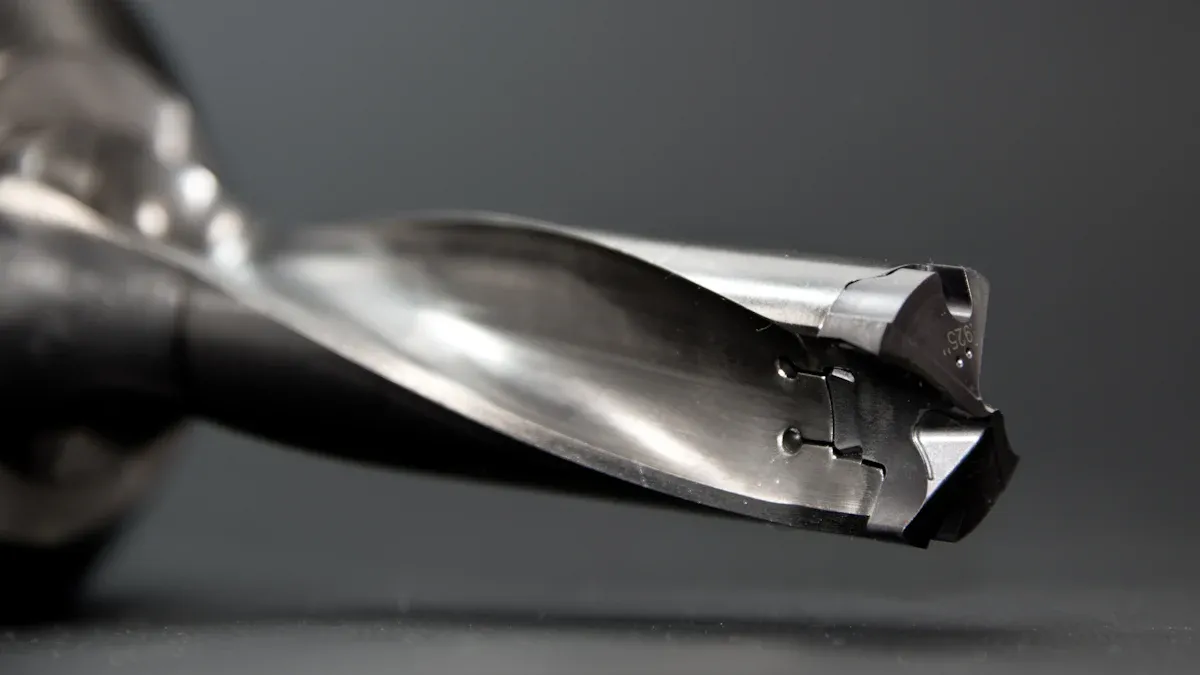
You can install self-drilling screws quickly and easily. These screws combine drilling and fastening in one step. You do not need to make a pilot hole first. The sharp tip acts like a drill bit, cutting into the material as you drive the screw.
To get the best results, use a high-torque electric or cordless drill. Pick one with a variable speed range from 0 to 1800 rpm. Avoid drills with low torque. They can overheat or fail during use. Always check your drill bits and replace any worn parts. This keeps your work smooth and reduces mistakes.
Here is a table to help you choose the right speed and pressure for different screw sizes:
Fastener Size | Recommended RPM | Applied Force (Lbs.) |
|---|---|---|
#12 | 1400 | 40 - 60 |
1/4 | 1200 | 40 - 60 |
Tip: Keep steady pressure on the drill. Do not push too hard. Let the screw do the work. If you use too much force, you might strip the threads or break the screw.
Follow these steps for a smooth installation:
Select the correct screw size and head type for your project.
Attach the screw to the drill bit or driver.
Place the screw tip on the material where you want to fasten.
Start the drill at a low speed to let the tip bite into the surface.
Increase speed as the screw drills and threads itself into the material.
Stop when the screw head sits flush or tight, depending on your needs.
Sharpening your drill bits and replacing worn components will help you avoid errors and keep your installation process efficient.
Self-drilling screws work best with certain materials. You can use them for metal-to-metal connections. They also work for wood-to-metal projects if the screw has a sharp point and a flute design. The flute helps remove chips as the screw drills in.
Here are the main materials you can use:
Thin or medium-gauge steel
Aluminum sheets
Wood attached to metal frames
Drywall to metal studs
Some plastics
Self-drilling screws combine drilling and threading. They make their own hole and cut threads at the same time. You finish the fastening in one step.
Note: These screws are not ideal for very hard or thick metals. The tip can burn out or stall. If you use too much force or the wrong drill, you might overdrive the screw or split thin materials. The drill tip can also wear out faster than a standard bit if you use it many times.
Choose the right screw for your material. For best results, use self-drilling screws on metal, wood-to-metal, or drywall-to-metal jobs. Always check the thickness and hardness of your material before starting.
Self-drilling screws are used in many building jobs. They help you work faster and make strong joints. You can use them for metal roofs and steel frames. They are good for HVAC systems and cladding, too. These screws also hold metal studs in place. The table below lists common uses and their benefits:
Application | Advantages |
|---|---|
Attaching metal roofing | Saves time and holds tight |
Securing metal studs | Works in many ways, less damage to materials |
Assembling steel frames | Quick to install, great for builders |
HVAC projects | Easy to use, good for thin metal |
Cladding | Works on many surfaces |
Steel framing | Strong and safe for building support |
Tip: Using self-drilling screws helps you finish faster and with less work in construction.
Self-drilling screws make metal jobs easier for you. You do not need to drill a hole first. This saves time and effort, especially with steel sheets. You can use these screws for car repairs or building metal frames.
Drilling and fastening happen at the same time, so you work faster.
Great for jobs where you cannot drill a hole first.
You do not need extra tools, so your work stays simple.
You install screws faster because drilling and tapping are together.
You save time and work because you skip drilling first.
These screws work well with hard metals like steel.
You can use self-drilling screws for many home projects. They help with repairs, small builds, and putting furniture together. You only need simple tools and do not have to drill a hole first.
Fast and easy for shelves, cabinets, or fences.
Good for beginners and people who do DIY often.
No extra steps, so you finish your project quickly.
Note: Self-drilling screws help you finish DIY jobs with less trouble and more confidence.
Self-drilling screws help you work faster. You do not need to make a pilot hole first. The screw tip works like a drill. You finish the job in just one step. This is helpful when you have lots of screws to put in. If you are on a roof or ladder, you only need to drive the screw once. You do not have to change tools or make extra holes.
When you need to put in many fasteners, you save a lot of time. This is true for big metal buildings or large decks. It is much easier to use one screw on a ladder or roof. You do not have to drill a hole and then use a screw. Self-drilling screws make the job faster and help you make fewer mistakes.
You finish your work quickly and do not mess up as much. This keeps you safe and helps you work better.
Self-drilling screws make strong and safe joints. The special tip and threads keep the screw straight. You do not have to worry about the screw moving around. Your materials stay tight and do not come loose.
Feature | Benefit |
|---|---|
Patented taper design | Makes the screw more accurate and saves time. |
One-handed installation | Lets you use your other hand to hold things steady. |
Straight driving | Stops the screw from slipping and keeps it on target. |
One builder said Philips drill-point screws wobbled and could not go into soft steel studs well.
Self-drilling screws fix this problem and stay in place.
You can trust that your work will last a long time.
You can use self-drilling screws for many jobs. The drill-shaped tip lets you use them in metal, wood, or plastic. You do not need special tools or training. These screws are good for metal roofs, HVAC work, and even cars or planes.
Metal Roofing: Holds metal sheets tight and keeps out water.
HVAC Systems: Makes it easy to put in ductwork.
Automotive/Aerospace: Helps build cars and planes with care.
Construction: Makes building faster because you do not need to drill first.
Manufacturing: Joins different materials quickly.
DIY Projects: Easy for anyone to use at home.
Self-drilling screws let you do many kinds of work. You get more choices and your jobs are easier.
You may ask how self-drilling screws are different from self-tapping screws. Both join materials, but they are not the same. Self-drilling screws have a drill bit tip. You do not need to make a pilot hole. Self-tapping screws need a hole made first before you use them.
Here is a table that shows how they are different:
Feature | Self-Drilling Screws | Self-Tapping Screws |
|---|---|---|
Pilot Hole Requirement | No, they drill their own pilot holes | Yes, require a pre-drilled hole |
Thread Cutting | Drills and taps threads simultaneously | Cuts threads in a pre-drilled hole |
Material Suitability | Suitable for harder materials like metal | Best for softer materials like wood and plastic |
Common Applications | Metal and composite applications | Woodwork, drywall, and plastic fastening |
Installation Complexity | Easier, as no pre-drilling is needed | Requires careful pre-drilling |
You use self-drilling screws for metal and hard composites. They are good when you cannot make a pilot hole. Self-tapping screws work best in wood, furniture, and plastic boxes. You must drill a hole first, which takes more time.
Tip: If you want to save time and work with metal, pick self-drilling screws. For wood or plastic, self-tapping screws might be better.
Studies say both screw types take about 5.5 minutes to install. Some places find self-tapping screws faster. Others like self-drilling screws more. Sometimes, self-drilling screws do not hold as well. Always choose the right screw for your job.
Regular screws are used in many projects. You must drill a pilot hole before using them. Self-drilling screws make their own hole as you drive them in. This saves you time and effort.
Here is a table to compare them:
Feature | Self-Drilling Screws | Regular Screws |
|---|---|---|
Pilot Hole Requirement | Cuts its own pilot hole | Requires pre-drilled pilot hole |
Installation Speed | Faster installation, combining drilling and fastening | Slower, as drilling is a separate step |
Control | Less control, suitable for general use | More control, better for precision tasks |
Cost Implication | Higher unit price, but lower total project cost due to reduced labor | Lower unit price, but higher labor costs |
You finish jobs faster with self-drilling screws. You do not need extra tools or steps. Regular screws give you more control for careful work, but you spend more time. Self-drilling screws may cost more each, but you save on labor and time.
Note: For quick and strong fastening, self-drilling screws are a smart choice. If you need careful placement, regular screws might be better.
When you pick the right self-drilling screw, you make your project stronger and safer. You should always match the screw to your material, size needs, and the look you want.
Different screw materials work best for different jobs. You want to choose a screw that will last and not rust. Here is a table to help you decide:
Material Type | Corrosion Resistance | Best Use Case |
|---|---|---|
Zinc-Plated Steel | Affordable, corrosion-resistant for indoor applications | Indoor projects |
Galvanized Steel | Better for outdoor use | Exposed environments |
Stainless Steel | Top-tier corrosion resistance | Coastal, marine, or animal confinement areas |
Painted Head Screws | Color-matched | Roofing and siding projects |
If you work outside or near water, stainless steel is a smart choice. For indoor jobs, zinc-plated steel works well. Ningbo Donghuang Hardware Co., Ltd. offers a wide range of finishes, so you can find the right screw for any setting.
You need to pick the right size for your project. The size affects how well the screw holds and how safe your work will be.
Diameter gives the screw its strength.
Length decides how deep the screw goes and how much it can hold.
Thread type changes how the screw grabs the material.
Drilling point shape helps the screw start and go through the material.
A screw that is too short may not hold. A screw that is too long can poke through or get loose.
Ningbo Donghuang Hardware Co., Ltd. has Self-Drilling Screws in sizes from M3 to M10. You can always find the right fit for your job.
The head style changes how the screw looks and works. Here are some common types:
Flat head sits flush for a neat look.
Pan head gives more holding power.
Hex washer head makes installation easy and stable.
Oval head gives a finished look and sits almost flush.
Pancake head is low and fits in tight spaces.
If you want a smooth finish, use a flat or oval head. For roofing or outdoor work, a hex washer head is best. Ningbo Donghuang Hardware Co., Ltd. offers Phillips Bugle Head and Hex Washer Head screws, so you can match the screw to your project.
Tip: Always check the material, size, and head style before you start. The right choice makes your work last longer and look better.
Self-drilling screws help you finish projects faster and with less effort. You save time because you do not need to switch tools. You use fewer tools, which lowers your costs. These screws work well in many materials and last longer in tough conditions. You can trust the quality from Ningbo Donghuang Hardware Co., Ltd. Explore different sizes and styles to find the best fit for your next job.
You do not need to drill a hole first when you use a self-drilling screw. The tip acts like a drill bit. Regular screws need a pilot hole.
Yes, you can use them outdoors. Choose screws with yellow zinc or stainless steel finishes. These finishes help stop rust and last longer in wet weather.
No, you do not need special tools. You can use a standard electric or cordless drill. Make sure the drill has enough power for the material.
You can find self-drilling screws in many sizes. For example, Ningbo Donghuang Hardware Co., Ltd. offers sizes from M3 to M10. Check your project needs before you pick a size.


