
Views: 0 Author: Site Editor Publish Time: 2025-12-31 Origin: Site
You might ask what makes self-drilling screws different from self-tapping screws. Self-drilling screws go through materials without pilot holes. Self-tapping screws need pilot holes and make threads as you put them in. Picking the right screw helps your project work better and last longer. Studies show self-drilling screws save 30% of installation time. They also lower failure rates by 40%.
Here are some market facts:
The self-tapping screw market is worth almost USD 9.85 billion in 2024.
The self-drilling screws market was USD 747.8 million in 2022.
Think about what your project needs and what materials you use before you choose.
Self-drilling screws help you work faster. You do not need to make pilot holes first. These screws drill and attach in one step. This makes them great for quick jobs.
Self-tapping screws need a pilot hole before use. They make their own threads as you screw them in. These screws work best with soft materials. Use them for wood or thin metal.
Picking the right screw is very important. Match the screw to your material. This helps your project stay strong and last longer.
Self-drilling screws work better for tough jobs. Self-tapping screws cost less for light tasks.
Think about rust protection for outdoor work. The right screws stop damage. This helps your project last a long time.
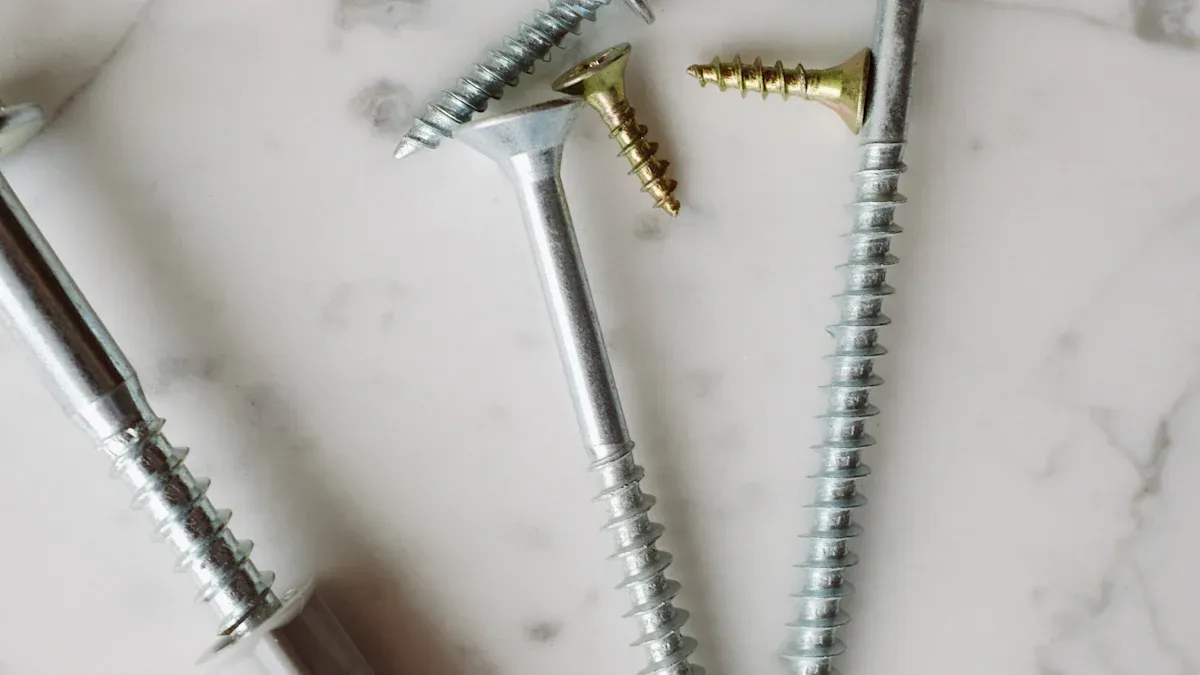
You will find self-drilling screws very useful when you need to fasten materials quickly. These screws combine drilling and threading in one step. The tip looks like a drill bit. It cuts through metal, wood, or plastic without needing a pilot hole. Engineering standards say self-drilling screws create their own hole, form threads, and secure materials in a single action. You save time and effort because you do not need extra tools.
Ningbo Donghuang Hardware Co., Ltd. offers self-drilling screws with drill bit-shaped tips. You can choose from stainless steel or zinc-plated options. These screws resist rust and last longer, even outdoors.
Self-drilling screws from Ningbo Donghuang Hardware Co., Ltd. have many features that help you work better. You get EPDM washers for strong sealing, which keeps water out in roofing jobs. The screws come in different sizes, so you can pick the right one for your project. Some styles have six ribs for a strong grip and less risk of stripping.
Tip: Using self-drilling screws means you drill, tap, and fasten in one step. This saves you time and lowers labor costs.
Here is a table showing the main features and benefits:
Feature | Benefit |
|---|---|
Drill Bit-Shaped Tip | No need for pilot holes |
High-Precision Threads | Secure fastening |
Corrosion Resistance | Works well outdoors |
EPDM Washers | Better sealing for roofing |
Versatility | Fits metal, drywall, and roofing |
Enhanced Durability | Lasts longer, resists wear |
You can use self-drilling screws in many industries. In construction, you use them for framing, drywall, and decking. In automotive work, they help with body and chassis assembly. Aerospace workers use them for aircraft frames. HVAC technicians use them to secure ductwork. You also see self-drilling screws in steel-to-steel and steel-to-timber connections, such as roof trusses and battens.
Ningbo Donghuang Hardware Co., Ltd. designs self-drilling screws for these common applications. You get reliable performance whether you work on metal, drywall, or roofing.
Self-tapping screws help you join metal, wood, or plastic. These screws have sharp tips and special threads. When you put them in, they make their own threads. You usually drill a small pilot hole first. The pilot hole guides the screw. It also stops the material from cracking or splitting. Self-tapping screws work well in thin or brittle materials. You do not need much force to use them.
Self-tapping screws give you many good things for your projects. They save you time and effort. This helps when you need to work fast. Here are some features and benefits:
Easy to install, sometimes without pre-drilling in soft materials
Make their own threads for a strong hold
Work with many types of materials
Lower the chance of hurting thin or fragile materials
Often have coatings that stop rust and make them last longer
Tip: Self-tapping screws help you finish work quickly and safely. You do not need special tools. This means you can finish your project faster.
Self-tapping screws are used in many jobs. They help you join metal to metal, metal to wood, and plastic parts. Here is a table with some common uses:
Industry | Application Description |
|---|---|
Construction | Used for joining metal to metal or metal to wood, like in metal roofs and siding. |
HVAC | Fastens ductwork and parts, so you do not need to pre-drill. This makes big jobs faster. |
Electrical | Holds parts in electrical boxes and panels. Works for metal and plastic. |
Electronics | Used to build devices and appliances. This helps make lots of products quickly. |
Furniture | Joins wood and other materials. This makes building easier and stops wood from breaking. |
Plumbing | Holds metal and plastic pipes and fittings. You do not need to pre-drill. |
Automotive | Used for many fastening jobs in cars and repairs. |
You can use self-tapping screws for many things. They work for building furniture and making electronics. Because they make threads as you put them in, people like to use them for many projects.
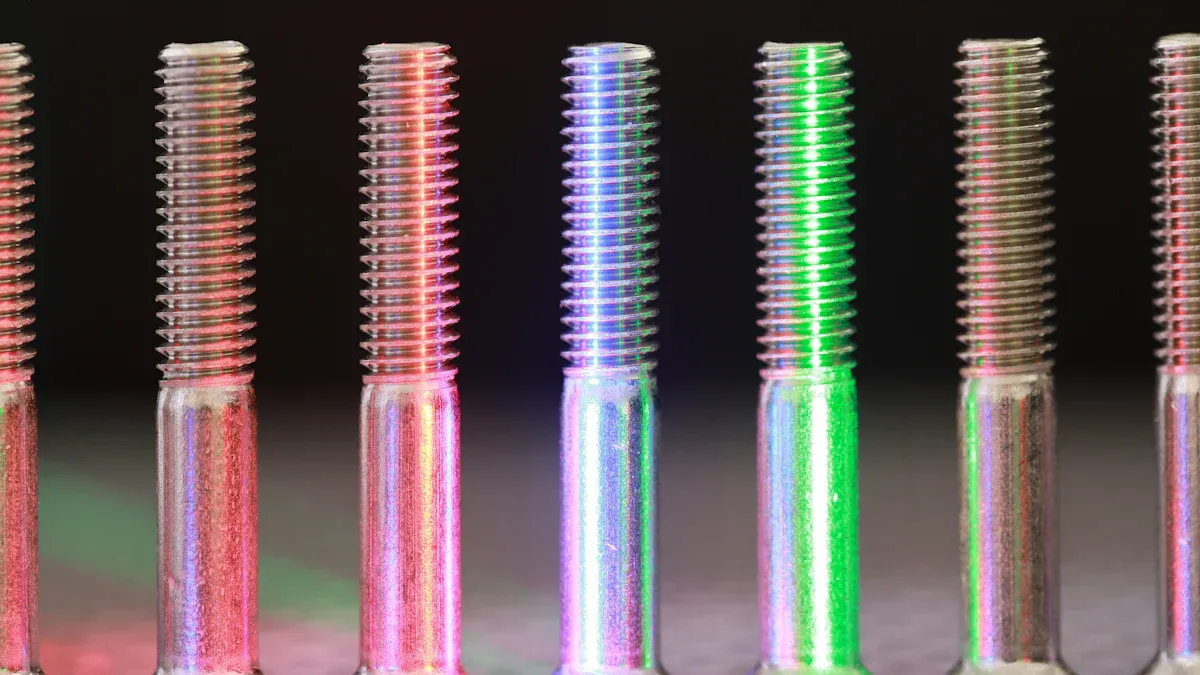
You need to understand how each screw works before you choose one for your project. Self-drilling screws let you drill, tap, and fasten in one step. You do not need a pilot hole. This saves you time and effort. Self-tapping screws need a pilot hole first. They cut their own threads as you drive them in, but they cannot drill their own hole.
Here is a table that shows the main functional differences:
Feature | Self-Drilling Screws | Self-Tapping Screws |
|---|---|---|
Pilot Hole | Can drill their own pilot holes | Requires a pre-drilled pilot hole |
Thread Cutting | Can cut their own threads | Can only cut their own threads |
Material Compatibility | Effective in a wide range of materials | Used with thin metals, plastics, and wood |
Note: Self-drilling screws help you finish jobs faster because you do not need to switch tools or drill separate holes.
You will notice clear design differences when you look at these screws. Self-drilling screws have a tip shaped like a drill bit. This special tip lets you drill into metal, wood, or plastic. The threads run along the shaft and help grip the material. Self-tapping screws have a sharp tip, but it does not look like a drill bit. You need to make a pilot hole before you use them.
Here is a table that compares their design features:
Feature | Self-Drilling Screws | Self-Tapping Screws |
|---|---|---|
Hole Creation | Can drill its own hole | Cannot drill its own hole |
Thread Cutting | Cuts its own threads | Cuts its own threads |
Installation Efficiency | More efficient due to combined actions | Requires pre-drilling for pilot holes |
Applications | More specialized applications | General applications |
Tip Design | Shaped like a twist drill bit | Standard tip for tapping |
Self-drilling screws often come with coatings like zinc or stainless steel. These coatings help prevent rust and make the screws last longer. Self-tapping screws also use these coatings, but you must drill a pilot hole before you use them.
You want your project to go smoothly and last a long time. Self-drilling screws give you speed and efficiency. You can install them quickly because you do not need to drill a pilot hole. This makes them a good choice for roofing, metal framing, and other jobs where you need to work fast. You save money because you do not need extra tools or steps.
Self-drilling screws enhance speed and efficiency in installation.
They eliminate the need for separate drilling and tapping operations, leading to cost-effectiveness.
Their design allows for effective performance across various applications.
"VersaTube self-drilling screws eliminate the need for predrilling prior to installation in metal substrates, allowing for a quicker, more economical installation process."
Self-tapping screws work well in thin metals, plastics, and wood. You use them when you need a strong hold but do not need to drill through thick materials. You must drill a pilot hole first, which takes more time.
Both types of screws use strong materials and coatings. You can find stainless steel and galvanized steel options for both. Self-drilling screws stand out because they can create their own pilot holes and cut threads. Self-tapping screws only cut threads after you drill a pilot hole.
If you want to finish your project quickly and avoid extra steps, self-drilling screws are the better choice. If you work with thin materials and need a precise fit, self-tapping screws will help you get the job done.
You should pick the right screw for your material. This helps stop weak spots and damage. Different screws work best with different materials. The table below shows which screw fits each material:
Screw Type | Suitable Materials |
|---|---|
Self-Drilling Screws | Steel, Aluminum |
Self-Tapping Screws | Timber, Metallic/Steel Substructures |
Self-drilling screws are good for steel and aluminum. Use them for metal roofs, steel frames, and aluminum panels. If you use timber or soft metals, self-tapping screws might be better. Always check your material before starting.
Material thickness matters too. Here are some things to remember:
Self-drilling screws work best in hard materials. They might break or slip if used on thick stuff.
Self-tapping screws are better for soft materials. You need a pilot hole for hard materials, and they may not work well if it’s too thick.
Tip: Pick a screw that matches both the material and its thickness. This keeps your project strong and helps you avoid mistakes.
Your project decides which screw you need. You want to finish fast and make it last. Self-drilling screws save time because you skip pilot holes. You can use them for many jobs:
Join wood panels to metal frames or brackets. This is quick and strong.
Put together car parts, trailers, and plane interiors. You get strength and accuracy.
Attach metal roofing and siding to steel or wood frames. The sharp tips go through metal without slipping.
Finish jobs faster since you do not drill pilot holes.
Ningbo Donghuang Hardware Co., Ltd. has self-drilling screws in many sizes and styles. You can get EPDM washers for roofing or zinc-plated screws for outside. These help you get good results in building, cars, and factories.
If you build furniture, work with electronics, or do plumbing, you might need self-tapping screws. These work well for wood, plastic, or thin metals. Always match the screw to your project.
Note: Using the wrong screw can make weak spots, damage, or even ruin your project. For example, wood screws do not work for metal, and drywall screws may not last outside.
You want your screws to stay tight and last long. Good installation is important. Here are some tips for self-drilling screws:
Technique | Description |
|---|---|
Alignment | Keep the screw straight for a strong hold. |
Tool Selection | Use a power drill or screw gun with torque control. Do not use impact drivers. |
Drilling Technique | Start slow, press steady, and let the tip cut. |
Finishing Steps | Make screw heads flat. Do not overtighten. Check if they hold tight. |
Safety | Wear safety glasses and gloves. Clean up metal bits. |
If you need to take out self-tapping screws, follow these steps to protect your work:
Use the right tool, like a screw extractor or rubber band for stripped screws.
Get your area ready. Hold the piece still and clear away dirt.
Press steady. Turn slowly to the left so you do not slip.
If the screw head is stripped, use a rubber band or pliers for grip.
Check the hole after. Fill it if needed.
Change your method for wood, plastic, or metal.
Wear safety glasses and gloves. Do not use too much force.
Safety Reminder: Always wear safety gear and work carefully. This keeps you safe and helps your project turn out well.
Ningbo Donghuang Hardware Co., Ltd. makes self-drilling screws that are easy to use and strong. You can trust their screws to help you finish your project fast.
This table shows how self-drilling screws and self-tapping screws are different. It helps you pick the right screw for your project.
Feature | Self-Drilling Screws | Self-Tapping Screws |
|---|---|---|
Working Principle | Drill tip makes the hole, threads hold it tight | Threads make matching grooves in the material |
Advantages | Drills and taps at once, saves time, works on hard stuff | Best for soft materials, saves money |
Applications | Used in building, metal jobs, and cars | Used in woodwork, furniture, and gadgets |
Materials | Mostly for metal, goes through up to 12mm | Good for wood, plastic, and thin metals |
Cost Considerations | Costs more at first but saves money later | Costs less at first but may cost more later |
Installation Efficiency | No pilot hole needed, goes in fast | Needs a pilot hole, takes longer to install |
Self-drilling screws save time because you skip pilot holes. Self-drilling screws work well for hard jobs like steel frames and roofs. You get strong fastening with self-drilling screws, even in thick metal. Self-tapping screws are best for wood, plastic, and thin metal. You must drill a pilot hole before using self-tapping screws. Self-tapping screws cost less at first, but you might pay more for labor and tools. Self-drilling screws help you finish big projects faster and cut labor costs. You can use self-drilling screws in small spaces where pilot holes are hard to make. Both screw types fight rust, so you can use them outside. Pick the screw that fits your material and project for the best results.
Tip: If you want to work fast and need strong screws, pick self-drilling screws. If you use soft materials and want to save money, self-tapping screws are a smart choice.
You can see the main differences in the table below:
Feature | Self-Drilling Screws | Self-Tapping Screws |
|---|---|---|
Pilot Hole Needed | No | Yes |
Thread Creation | Drills and taps at once | Cuts threads only |
Common Uses | Construction, DIY | Thin metal, plastics |
To choose the right screw, follow these steps:
Match the screw to your material and project.
Pick corrosion-resistant options for outdoor jobs.
Select the right length, diameter, and head type.
High-quality fasteners from Ningbo Donghuang Hardware Co., Ltd. help you work faster and safer. Review the comparison and ask experts if you need advice.
You use self-drilling screws to drill and fasten in one step. Self-tapping screws need a pilot hole first. Self-drilling screws save you time on metal and roofing jobs.
You can use self-drilling screws in wood, but they work best in metal. For wood projects, self-tapping screws often give you a better grip and finish.
You do not need special tools for self-drilling screws. A standard power drill or screw gun works well. Make sure you use the right bit size for your screw.
EPDM washers help seal out water. You use these screws for roofing or outdoor jobs. The washer keeps your project dry and protects against leaks.
You match the screw size to your material thickness and project type. Check the length and diameter. If you need help, ask a hardware expert or review product guides.


