
Views: 0 Author: Site Editor Publish Time: 2025-10-07 Origin: Site
A drywall screw lets you connect drywall panels to wood or metal studs. It is important for keeping drywall safe, flat, and steady on walls and ceilings. Drywall screws are different from regular screws or nails. They have a sharp tip and special threads. These threads hold drywall tightly but do not hurt it. Drywall screws are used in many ways in building today:
Function | Description |
|---|---|
Drywall Installation | Connects drywall sheets to studs and stops sagging. |
Ceiling Installation | Keeps drywall held up above your head. |
Soundproofing and Insulation | Holds many drywall layers for better sound and heat control. |
General Construction | Helps with light framing and keeps subfloors steady. |
Furniture Assembly | Good for fast, strong building in DIY projects. |
Home Repairs and Maintenance | Puts loose drywall back and adds fixtures. |
Crafts and Hobbies | Gives strong grip in woodworking and making models. |
Drywall screws help hold drywall to studs. They keep the wall steady and smooth.
Pick the right screw for the stud type. Use coarse-threaded screws for wood. Use fine-threaded screws for metal.
Choose screws that fit the drywall thickness. Make sure the screws are not too long or short. This helps the drywall stay strong and safe.
Use good quality screws that last a long time. This is important in places with lots of moisture.
Put screws in the right way. Space them out evenly and set them at the right depth. This stops mistakes and helps the wall last longer.
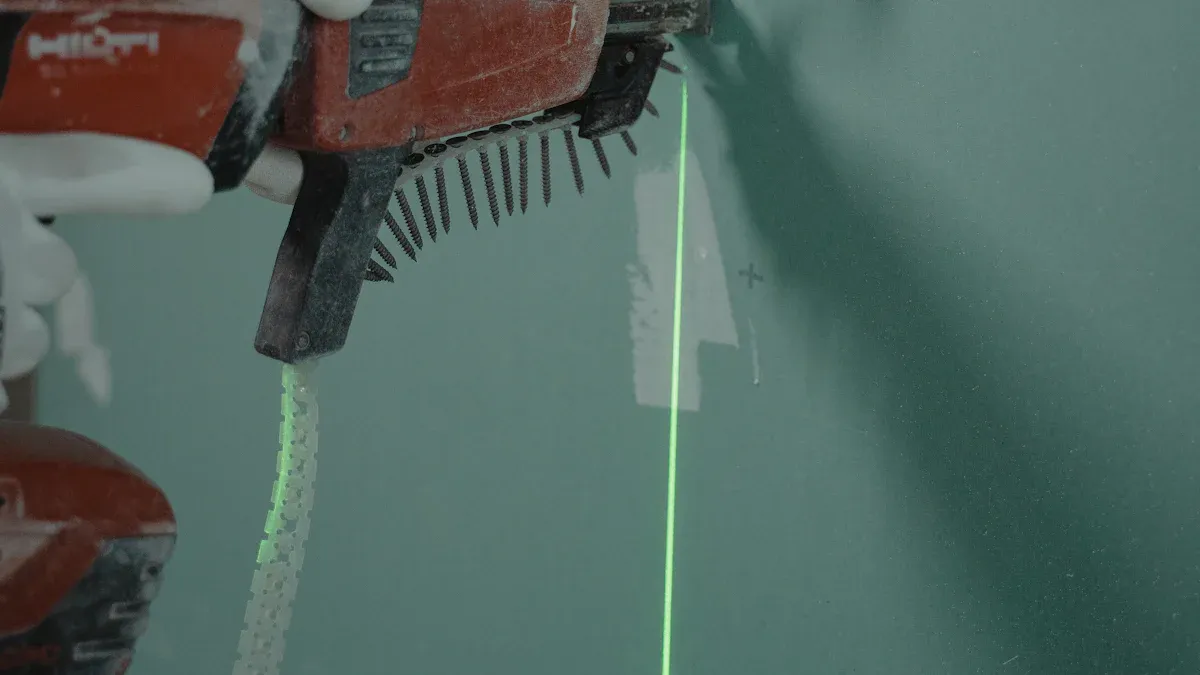
Have you ever thought about why drywall screws matter? A drywall screw is made to attach drywall panels to wood or metal studs. People use drywall screws because they hold drywall tight, stop damage, and help make walls and ceilings smooth.
Industry standards say drywall screws should:
Hold drywall to framing so walls stay strong.
Stop cracks and damage by keeping drywall in place.
Help walls look smooth for paint or wallpaper.
Keep drywall tight for better sound and heat control.
Make walls safer and last longer by stopping loose panels.
Using drywall screws helps your walls stay strong and look good for a long time. These screws are important for every drywall job, like new homes, fixing old ones, or making repairs.
What makes drywall screws special compared to other fasteners? You can tell by looking at their threads, head shape, and what they are made of. Each part helps drywall screws work better for certain jobs.
Feature | Description |
|---|---|
Coarse Thread | Deeper, wider threads grip wood studs tightly and increase pull-out resistance by 40%. |
Hi-Low Thread | Double thread structure allows fast penetration, perfect for mixed wood and metal framing. |
Trim Head | Smaller head fits in tight spaces, making the screw nearly invisible after installation. |
Bugle Head | Cone-shaped head prevents drywall from cracking, ideal for large projects. |
Black Drywall Screw | Phosphate coating resists rust, best for indoor dry environments. |
Galvanized Screw | Zinc coating protects against rust, suitable for humid areas. |
Nickel Plated Screw | Extra rust resistance, great for coastal regions. |
Ruspert Screw | Advanced coating stands up to harsh environments. |
There are many types of drywall screws, and each one has a special job. For example, bugle head screws help stop surface damage. Coarse thread screws work best with wood studs. The thread design helps drywall screws grip tight and keep panels safe.
When picking drywall screws, look at the gauge. The gauge tells you how thick the screw is. The right gauge helps drywall stay in place and not get damaged.
At Ningbo Donghuang Hardware Co., Ltd., we make strong drywall screws and other fasteners for building and repairs. Our products meet world standards, and we use new machines and strict checks to make sure our screws are good. We offer black drywall screws, galvanized drywall screws, and special screws for different places.
Tip: Always pick drywall screws that fit your project. The right screw type, thread, and coating make your work easier and last longer.
New drywall screw designs help you work faster and smarter. Smart tools and better materials make jobs easier. Special main tees cut down on waste. Automatic taping tools and electric sanders with dust collection keep things cleaner and safer.
Think about the environment when using drywall screws. Making and throwing away screws can hurt nature. Using things like drywall adhesive or staplers can help lower your project’s impact.
If you want drywall screws you can trust, pick a company with a good name. At Ningbo Donghuang Hardware Co., Ltd., we follow world rules, change with the market, and ship fast to give you good fasteners. Our customers count on us for quality and great service.
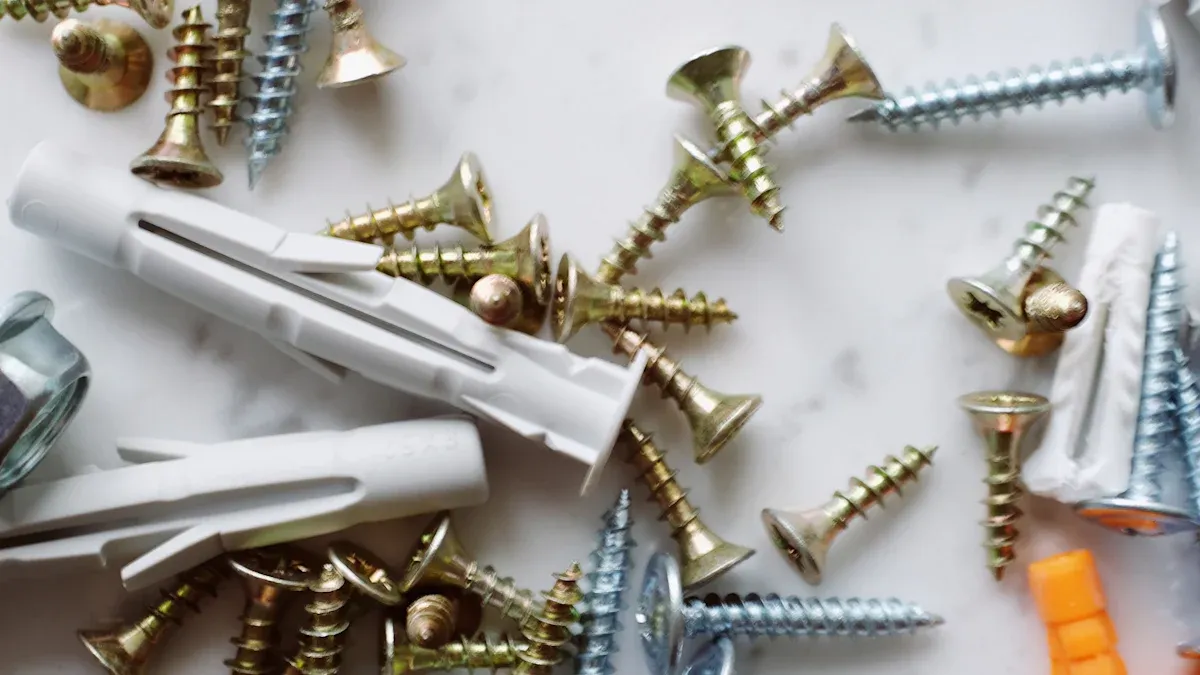
When you choose a drywall screw, you need to know about the different types. Each type works best for certain drywall and stud materials. Let’s look at the main features: head styles, thread types, and coatings.
Drywall screws come with different head shapes. The head style affects how the screw sits in the drywall and how the finished wall looks.
Head Style | Description | Use Cases |
|---|---|---|
Countersunk (Flat) Heads | Sits flush with the drywall surface for a clean, smooth finish. | Furniture, machinery, construction applications |
Non-Countersunk Heads | Rests on top of the drywall, leaves a visible or raised profile. | Woodworking, light construction, decorative pieces |
Flat heads work well when you want the screw to be level with the drywall. This is important for a smooth wall that is easy to paint or cover.
Round heads stick out a little. They help spread out pressure, which protects thinner drywall from damage.
Tip: For most drywall projects, you should use flat head screws to get a neat finish.
The thread type of a drywall screw decides how well it holds the drywall to the stud. You will find two main types: coarse and fine.
Coarse thread screws grip wood studs tightly. They are strong and work well for thick drywall or ceilings.
Fine thread screws are best for metal studs. They give a tight hold and do not need pre-drilling. Fine threads are also less likely to damage metal.
Some screws are self-drilling. These make installation faster because you do not need to drill a hole first.
Coatings protect drywall screws from rust and make them last longer. The right coating depends on where you will use the drywall.
Coating Method | Description | Effectiveness |
|---|---|---|
Zinc Plating | Thin zinc layer on the screw surface. | Protects from corrosion, self-healing properties. |
Phosphating Treatment | Phosphate coating for better corrosion resistance. | Helps paint stick, stops screws from loosening. |
Nickel Plating | Nickel layer for corrosion resistance and a shiny look. | Good wear resistance, looks polished. |
Chrome Plating | Chromium layer for durability and shine. | Excellent corrosion and abrasion resistance. |
If you work in a humid area, zinc or nickel coatings help keep screws from rusting. Phosphating is good when you plan to paint over the drywall. Chrome plating gives extra protection and a bright finish.
Note: Always match the screw type and coating to your drywall and stud material. This helps your project last longer and look better.
Selecting the right drywall screw is important for a strong and lasting wall. You need to think about both the length and gauge of the screw, as well as the type of stud you will use. This section will help you make the best choice for your project.
When you pick a screw for drywall, you must match the length to the thickness of the drywall. If you use a screw that is too short, it will not hold the drywall well. If you use one that is too long, it may damage the wall or stick out.
For standard 1/2-inch drywall, use 1 1/4-inch screws. This length gives enough grip in the stud and keeps the drywall flat.
Thicker drywall, such as 5/8-inch, needs longer screws. Choose screws that are at least 1 5/8 inches for these panels.
If you work with special drywall, like fire-resistant or soundproof panels, check the thickness and pick a screw that will go through the drywall and into the stud by at least 1 inch.
The type of stud also affects screw length. Metal studs often need slightly shorter screws than wood studs because metal is thinner and harder.
The gauge of a screw tells you how thick and strong it is. Heavier gauges support heavier loads and help prevent the drywall from sagging or pulling away from the wall.
Use a gauge that is strong enough to hold the drywall but not so thick that it cracks the panel.
Most drywall screws come in gauges from #6 to #8. For most home projects, a #6 or #7 gauge works well.
Tip: Always check the drywall thickness before you buy screws. Using the right length and gauge helps your walls stay strong and smooth.
The type of stud you use—wood or metal—changes the kind of drywall screw you need. Each material grips screws in a different way, so you must choose the right thread type and screw design.
Stud Material | Screw Type | Thread Type | Purpose |
|---|---|---|---|
Metal | Fine-threaded screws | Fine threads | Grips metal studs tightly |
Wood | Coarse-threaded screws | Coarse threads | Anchors well in wood |
Metal | Self-drilling screws | Sharp drill point | Goes through steel without pilot holes |
Wood | Coarse-threaded screws | Coarse threads | Avoid using with metal studs |
For wood studs, use coarse-threaded screws. The wide threads bite into the wood and hold the drywall firmly.
For metal studs, use fine-threaded screws. The narrow threads grip the metal and stop the screw from slipping.
If you work with steel studs, self-drilling screws save time. These screws have a sharp tip that drills into the metal without making a pilot hole.
Note: Using the wrong screw type can make the drywall loose or cause damage to the studs.
When you choose drywall screws, always look for products that meet high quality standards. Good screws last longer and keep your drywall safe.
BIS certification shows that the screws meet strict quality rules.
IS 18507:2024 sets the requirements for drywall screws, such as thread size, material, and hardness.
CE certification means the screws follow European safety standards.
Standard | Description |
|---|---|
BIS Certification | Ensures drywall screws meet IS 18507 standards for quality and safety. |
IS 18507:2024 | Specifies requirements for drywall screws, including thread diameter, material, and hardness. |
CE Certification | Indicates compliance with European safety standards, applicable to various screw types. |
Choosing screws with these certifications helps you trust that your project will be safe and last a long time.
Ningbo Donghuang Hardware Co., Ltd. offers drywall screws that meet these important standards. You can rely on their products for both home and commercial projects.
When you install drywall, you often wonder whether to use a screw or a nail. Each fastener has its own strengths and weaknesses. The table below shows how drywall screws and nails compare in holding strength and durability.
Feature | Drywall Screws | Nails |
|---|---|---|
Holding Strength | Hold better, grip snugly, minimize movement | Tend to loosen over time, can pop out |
Long-Term Durability | Remain in place even after years | More likely to work themselves out |
Ceiling Installations | Tighter grip, secure, durable | Higher risk of sagging and nail pops |
You get greater grip strength with a drywall screw. This means your drywall stays flat and secure. Screws also last longer and resist movement, even in high-stress areas like ceilings. Nails install faster, but they can pop out or loosen, especially when the wall vibrates or shifts.
Here are the main advantages and disadvantages:
Advantages of drywall screws:
Strong grip for stability.
Easy to remove if you need to fix something.
Work well in high-stress projects.
Resist moisture better than nails.
Disadvantages of drywall screws:
Cost more than nails.
Can break if you rush installation.
Need a power drill to install.
Advantages of nails:
Quick to install with a hammer or nail gun.
Simple for beginners.
Disadvantages of nails:
Can pop out in tough conditions.
Need more nails for the same strength.
Weaker hold in drywall.
Drywall screws have a tensile strength of 60,000–80,000 PSI and a shear failure rate of only 2%. Nails have a much lower tensile strength and a higher failure rate. Screws also keep 98% of their holding power after five years, while nails drop to 63%.
Tip: If you want your drywall to last and stay secure, choose screws for most installations.
You should pick the right fastener for each situation. The table below helps you decide when to use a drywall screw or a nail.
Situation | Recommended Fastener | Reason |
|---|---|---|
Hanging drywall on ceilings | Screws | Less likely to work their way out, reducing risk of overhead hazards. |
Hanging drywall on walls | Nails or Screws | Both provide a secure hold; gravity is not a factor. |
Cost-effective installations | Nails | More affordable than screws, making them a budget-friendly option for drywall installation. |
If you install drywall on a ceiling, always use screws. They grip better and prevent panels from sagging or falling. For walls, you can use either nails or screws, but screws offer more security. If you want to save money, nails work for simple wall jobs.
In high-moisture or high-stress areas, screws with zinc phosphate or ceramic coatings resist rust and keep their threads strong. These coatings protect your drywall from stains and damage.
Note: For best results, use screws from a trusted manufacturer like Ningbo Donghuang Hardware Co., Ltd. You get reliable performance and long-lasting results.
Before you start, gather the right tools for a smooth drywall installation. The right equipment helps you work faster and keeps your project safe and neat.
Drywall screw gun: Drives each screw to the perfect depth and prevents overdriving.
Drywall lift: Holds panels in place, especially for ceilings, and reduces the risk of injury.
Jab saw or Rotozip: Cuts clean holes for outlets and plumbing.
T-square or drywall ruler: Ensures straight, accurate cuts.
Drywall stilts: Makes it easier to reach high walls or ceilings without moving ladders.
Wearing safety gear is important. Use safety glasses, gloves, a dust mask, and sturdy shoes to protect yourself from dust and sharp edges.
Follow these steps to install drywall screws correctly:
Prepare the wall. Mark the location of studs using a pencil and a level.
Lift the drywall panel into place. Use a drywall lift for ceilings or high walls.
Start at the center of the panel. Drive the first screw into the stud, keeping it at least 3/8 inch from the edge.
Space screws every 12 inches along the field and every 6 to 8 inches along the edges for wood studs. For metal studs, use screws every 8 inches on the edges.
Drive each screw until the head is just below the surface, but do not break the paper facing.
Check that all screws are snug. Avoid over-tightening, which can damage the drywall.
Tip: High-quality drywall screws from Ningbo Donghuang Hardware Co., Ltd. help prevent nail pops and keep your walls strong for years.
Many people make simple errors during drywall installation. You can avoid these problems by following best practices:
Inaccurate measurements: Double-check before cutting to prevent waste.
Poor screw placement: Mark studs clearly to avoid missing them.
Overdriving screws: Stop when the screw head is just below the surface.
Placing screws too far apart: Follow recommended spacing for stability.
Lack of edge support: Make sure at least 1 inch of framing is exposed at corners.
Incorrect edge orientation: Place cut edges on outside corners for better finishing.
Not checking outlet holes: Test fit around outlets before fastening.
Note: Store your screws in a dry, well-ventilated area to prevent rust and always inspect them before use.
You learned that picking the right drywall screw makes your drywall strong and safe. When you select screws, think about the stud material, drywall thickness, and thread design. Stainless steel screws work well in humid places, while phosphated screws help paint stick better. High-quality screws prevent nail pops and keep your drywall secure for years. If you want reliable results, use screws from Ningbo Donghuang Hardware Co., Ltd. Always check your tools and avoid overtightening. Careful installation helps your drywall last longer and look great.
Stud material and drywall thickness matter.
Use coarse-threaded screws for wood, fine-threaded for metal.
Make sure screws penetrate studs by at least 1/2 inch.
Remember: Safe installation starts with the right screw and careful use.
You should use 1 1/4-inch drywall screws for 1/2-inch drywall. This length gives a secure hold in wood or metal studs and prevents the screw from poking through the other side.
Yes, you can use drywall screws for light wood projects. Drywall screws grip wood well because of their coarse threads. For heavy-duty woodwork, use wood screws for better strength.
Place drywall screws every 12 inches along the center of the panel and every 6 to 8 inches along the edges. This spacing keeps the drywall flat and prevents sagging or movement.
You do not need to pre-drill holes for drywall screws in wood studs. For metal studs, use self-drilling drywall screws. These screws have sharp tips that cut through metal easily.
You can buy high-quality drywall screws from Ningbo Donghuang Hardware Co., Ltd. Their screws meet international standards and work well for home and commercial projects. Contact their team for expert advice and fast delivery.


