
Views: 0 Author: Site Editor Publish Time: 2025-10-27 Origin: Site
You want to know the difference between construction screws and wood screws. The answer helps you choose the right screw for your project. Safety and durability depend on using the correct screw type. Construction Screws vs Wood Screws have unique features. You get better results when you match the screw to the job. Picking wisely protects your work and keeps your project strong.
Tip: Always check screw specifications before you start building.
Construction screws are made for tough jobs. They are strong and last long. People use them for framing and outdoor work.
Wood screws are best for lighter jobs. They are good for furniture, cabinets, and trim. They help make things look neat.
Always pick the right screw for your project. The correct screw keeps things safe. It also helps your work last longer.
Think about the weather when picking screws. Use corrosion-resistant screws outside to stop rust.
Putting screws in the right way is important. Follow good steps so screws stay tight. This keeps your projects safe and strong.
You can see how construction screws and wood screws are different in this table. The table shows what each screw is good for. It helps you pick the right screw for your project.
Feature | Construction Screws | Wood Screws |
|---|---|---|
Material | Hardened or stainless steel | Zinc or mild steel |
Strength | High load, structural rated | Lower load, non-structural |
Thread Design | Deep, aggressive, self-tapping | Basic, partial or full thread |
Head Design | Hex or star for high torque | Slotted or Phillips |
Corrosion Resistance | Galvanized or coated | Usually uncoated |
Certification | Code-compliant (e.g. ICC) | Not typically rated |
Typical Applications | Framing, decks, beams | Trim, panels, cabinetry |
Cost | Higher | Lower |
Note: Construction screws have special coatings. These coatings help stop rust. This makes them better for outdoor or tough jobs.
When you look at construction screws and wood screws, you see they are not the same. Construction screws are made from strong steel. They can hold heavy things and are used for big jobs. Their threads are deep and grip wood tightly. This helps them hold more weight.
Wood screws are used for lighter work. You use them for trim or cabinets. They have finer threads and are made from softer metals. Most wood screws do not have coatings. They can rust if you use them outside.
You should pick the screw that fits your job. Construction screws are strong and last longer for big projects. Wood screws are simple and cheaper for small, indoor jobs. Knowing these differences helps you build safer and better projects.
Construction screws are used in many building jobs. They hold wood framing together very well. You also use them to put up drywall. These screws work for metal sheets too. They fit wood, metal, and composite boards.
Wood framing needs strong screws for support.
Drywall panels stay secure with these screws.
Metal sheets need tough screws to hold tight.
Outdoor furniture and stairs use construction screws.
You pick these screws for jobs that need strength.
These screws match many materials. They can hold heavy things without breaking. Weather or temperature changes do not hurt their performance. You can trust them in many places.
"Lag screws, also called lag bolts, are heavy-duty screws. They have a hex head and coarse threads. You use them to connect heavy lumber or parts. They are good for structural jobs."
Screws hold things together for a long time. You can take them out or adjust them if needed. Construction screws and wood screws are different in these ways.
Construction screws have special features that make them strong. Every screw is made for tough jobs. Deep threads help grip materials and make tight joints. These screws work fast and hold things securely.
Feature | Description |
|---|---|
Superior Strength | These screws are strong for heavy-duty jobs. |
Enhanced Performance | Screws attach things quickly and stay tight. |
Corrosion Resistance | Special finishes protect screws from rust and weather. |
Deep Thread Design | Threads grip materials and stop slipping. |
Professional Head | The head shape helps you drive screws easily. |
Long-Term Performance | Good quality stops screws from failing over time. |
Extreme Weather Resistance | Screws can handle moisture and temperature changes. |
Construction screws can tap themselves into materials. You do not need to drill first. They go deep and make tight joints. You can trust them for hard jobs. Ningbo Donghuang Hardware Co., Ltd. makes strong screws with good threads. You get reliable screws for every project.
You use wood screws in many woodworking projects. These screws help you build strong furniture, cabinets, and decks. You can rely on wood screws to create secure joints that last for years.
You find wood screws essential in cabinetry. They hold panels and frames together tightly.
Decking projects benefit from wood screws. These screws resist outdoor conditions and keep boards in place.
Furniture construction depends on wood screws for strong connections. Chairs, tables, and shelves stay sturdy because of them.
Wood screws work well in soft and hard woods. You choose them for projects where appearance and strength matter. Their design makes them easy to drive into wood without splitting it. You see wood screws used in trim work, shelving, and even small crafts. These screws give you flexibility for many applications.
Tip: Always select the right length and gauge of wood screws for your project. This helps you avoid splitting wood and ensures a tight fit.
Wood screws have special features that make them perfect for joining wood. You notice sharp threads that cut into wood and hold pieces together. The wedge-shaped shank lets you drive screws deep, creating strong joints.
Here is a table showing what makes wood screws unique:
Feature | Description |
|---|---|
Sharp Threads | Cut into wood, improving grip and holding power. |
Wedge-shaped Shank | Bores into wood, making joints strong. |
Drive Types | Phillips, square-head, and star-drive reduce slippage and make installation easier. |
Head Shapes | Flat, round, and oval heads suit different applications and affect appearance. |
Gauges | Various thicknesses match different project needs. |
Lengths | Multiple lengths fit different wood thicknesses. |
Materials | Steel, stainless steel, and brass offer choices for different environments. |
You see wood screws designed with sharp points for easy penetration. Coarse threads give you better holding power in softer woods. Some screws have built-in washers to stop the head from pulling through. Fully threaded screws transfer load and prevent splitting.
You find high-strength steel in many wood screws. This lets you drive long screws with high torque. Coatings like zinc or black oxide protect screws from moisture and wear.
When you choose wood screws, look at threads per inch and thread pitch. These details affect how well the screw grips the wood. You get better results when you match the screw to your project’s needs.
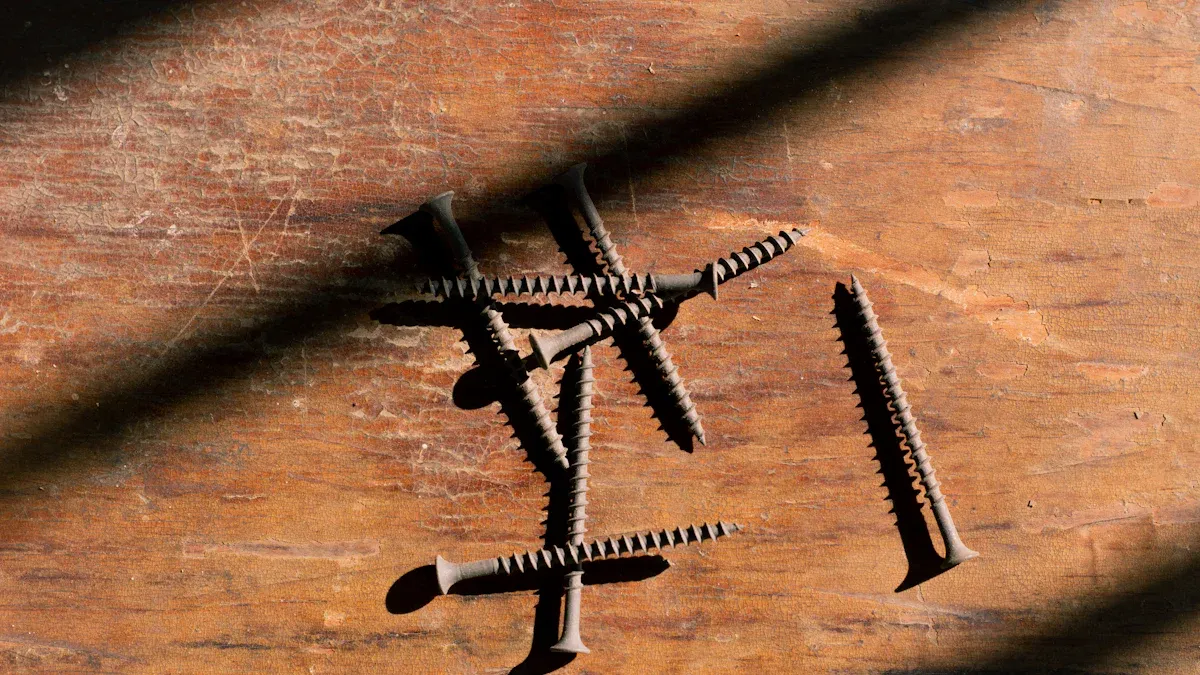
When you look at construction screws and wood screws, you see they are different. These differences help you pick the best screw for your project. You want the right screw for safety and strength. Using the correct screw makes your work last longer.
Construction screws are made from strong steel. This makes them good for heavy jobs. Wood screws use carbon steel or stainless steel. These metals work well for lighter tasks.
Type of Screw | Material Composition | Purpose/Applications |
|---|---|---|
Wood Screws | Carbon steel or stainless steel, often with coatings | Designed for lighter applications in wood |
Construction Screws | High-strength steel with specialized thread designs | Intended for heavy-duty applications |
Construction screws can hold more weight. You use them for things that need to be strong. Their thick shank helps stop breaking. Wood screws have a thinner shank. You use them for jobs that do not need much strength.
Tip: Use construction screws for frames and decks. Use wood screws for cabinets and trim.
Threads help screws stay in place. Construction screws have deep threads. These threads hold things tight and stop slipping. Wood screws have wider threads. They grip wood but are not as strong for big jobs.
Type of Screw | Thread Design Characteristics | Grip and Holding Power |
|---|---|---|
Construction Screws | Aggressive threads for serious clamping force | Superior holding power in structural jobs |
Wood Screws | Coarser thread pattern for gripping wood fibers | Firm hold in wood, less for heavy-duty jobs |
You need strong grip for outdoor furniture. Construction screws give you that grip. For shelves or crafts, wood screws are enough.
The head and drive type make screws easy to use. Screws come with flat, round, pan, and trim heads. Each head works for different jobs.
Flathead sits flat with the wood.
Roundhead looks nice and sticks out.
Panhead is wide and spreads force.
Trimhead is small and hard to see.
Drives include Phillips, square, and star. Phillips stops slipping. Square gives better control. Star gives more grip and stops slipping.
Note: Star drives work best with strong drills. You finish faster and use less effort.
Coatings protect screws from rust. Construction screws use zinc or galvanization. These coatings help screws last outside. Wood screws use Quik Guard or zinc with extra coats. These help screws last longer in wet places.
Feature | Construction Screws | Wood Screws |
|---|---|---|
Coating Type | Electroplated zinc, hot-dip galvanization | Quik Guard, electroplated zinc + organic coat |
Corrosion Resistance | High, especially with galvanization | Improved, effective in various conditions |
Lifespan | Longer in harsh environments | Long-lasting in moderate moisture |
Environmental Suitability | Harsh conditions, outdoor use | Woodworking, moderate moisture |
Compliance Standards | ASTM A153, Class D | ICC-ES AC257 Exposures 1 and 3 |
Pick construction screws for outdoor jobs. Pick wood screws for indoor jobs.
Price is important when buying screws. Construction screws cost more because they are stronger. You pay more for better strength and longer life. Wood screws cost less. You use them for simple jobs.
Construction screws cost more but work better for big jobs.
Wood screws cost less and work for light jobs.
Think about your project before you buy screws. You get better results when you match the screw to the job.
At Ningbo Donghuang Hardware Co., Ltd., I care about quality. I use strong steel for construction screws and good coatings. My wood screws have sharp threads and resist rust. You can trust my screws for safety and strength.
If you need good screws, check my wood and construction screw choices. Many people like how strong and smooth my screws are. You get help and fast shipping when you order from me.
You need to think about your project before picking screws. The type of job and how much weight it must hold will guide your choice. Construction screws work best for heavy-duty projects. You use them for framing, decks, or any job that needs strong support. Wood screws fit lighter tasks like building shelves or attaching trim.
Here is a table to help you compare:
Factor | Construction Screws | Wood Screws |
|---|---|---|
Application | Heavy-duty, structural, framing | Cabinets, trim, light wood projects |
Load Requirement | High load, structural rated | Lighter load, non-structural |
Coating | Often coated for corrosion resistance | Sometimes coated for outdoor use |
You should always match the screw to the load. Structural screws give you strong, safe connections. Wood screws work well for lighter, non-structural jobs.
You must consider where you will use the screws. Moisture and temperature changes can affect how well screws last. High moisture can cause rust. Temperature swings can make wood expand or contract, which may loosen screws.
Choose screws with special coatings for outdoor or wet areas.
Use 316 Marine Grade Stainless Steel screws in high-moisture places.
Pick ACQ-compatible screws for treated lumber.
Avoid over-tightening to prevent splitting or warping.
You protect your project when you select the right screws for the environment.
You improve your project by matching the screw to the job. The right choice gives you better strength, looks, and long-term results.
Select screws based on size, thread type, and material.
Use construction screws for frames, decks, and heavy structures.
Pick wood screws for furniture, trim, and crafts.
Follow proper installation steps for best results.
Good installation prevents problems and keeps your work strong.
Tip: The right screw and careful installation save you time and money. You get a safer, more reliable project.

You want your project to last. You need to install construction screws the right way. Follow these steps to get strong and safe results:
Drill a pilot hole in masonry or metal. Make the hole slightly smaller than the screw diameter. This helps the screw go in smoothly.
Align the screw with the pilot hole. Keep it straight. This gives you maximum holding strength.
Make sure the screw penetrates the main member by at least four times its diameter. This meets safety standards and keeps your structure secure.
Use a socket wrench or impact driver to drive the screw. Tighten until the head sits flush with the surface.
Check for stability. Avoid over-tightening. This prevents stripping threads or damaging the material.
Tip: Always use high-quality screws from a trusted manufacturer like Ningbo Donghuang Hardware Co., Ltd. You get better performance and safety.
You want wood joints to stay tight and look good. Use these tips to install wood screws and avoid splitting:
Start with a pilot hole. Drill a small hole in the wood. This gives the screw a clear path and reduces splitting.
Choose countersunk screws. These sink into the surface and help protect the wood.
Apply consistent pressure when driving the screw. This keeps the wood from cracking.
Use a low power setting on your drill. This protects the wood and keeps the screw from going in too fast.
Consider the humidity. Dry wood splits more easily. Work carefully if the air is dry.
Note: Good installation helps screws hold tight and keeps your project strong for years.
You get better results when you follow these steps. Proper installation makes your work safer and more durable.
Many screws are used in building jobs. Deck screws are good for outdoor work. These screws are longer than most construction screws. They hold decking boards tightly. Deck screws are made to resist rust from rain and sun. Their thick shank and deep threads help grip boards well.
Here is a table that shows how deck screws and construction screws are different:
Feature | Deck Screws | Construction Screws |
|---|---|---|
Primary Use | Outdoor projects, decking, fencing | Structural work, framing |
Material | Stainless Steel | Hardened Steel |
Thread Design | Sharp, coarse threads | Aggressive threads |
Head Type | Bugle head | Torx or square drive |
Best For | Weather-exposed projects | Load-bearing connections |
Specialty fasteners come in many shapes and sizes. You use them for jobs that need extra strength. Some work in concrete, others in metal. These fasteners are used where regular screws do not work.
Tip: Pick screws and fasteners that fit your project’s needs and the place you use them.
Screws and fasteners are used in many industries. Each industry uses them in its own way.
Electronics use special fasteners for circuit boards and connectors. These parts need to be strong and precise.
Construction uses fasteners to hold steel, wood, and concrete together. These keep buildings safe and strong.
Automotive work uses fasteners for frames, engines, and wheels. These must handle heat and shaking.
When you choose screws for industry, think about the place they will be used. Some need to resist sunlight or saltwater. For places with lots of shaking, use locknuts that stay tight.
Look at the place where you will use the fastener.
Choose materials that can handle tough conditions.
Use locknuts for areas with lots of vibration.
Ningbo Donghuang Hardware Co., Ltd. has many screws and fasteners. Their products are made for different industries. You can trust their quality for every job.
You now know how construction screws and wood screws are different. Construction screws are strong. You use them for framing and outdoor jobs. Wood screws are better for furniture and trim. They work well inside. Look at this table to help you pick the right screw:
Project Type | Best Screw Choice | Why Use It? |
|---|---|---|
Structural framing | Construction screws | High strength, long-term durability |
Furniture, cabinets | Wood screws | Clean finish, indoor load-bearing applications |
Outdoor projects | Deck or galvanized screws | Corrosion protection, long-term durability |
Outdoor environments | Galvanized or stainless | Extra corrosion protection |
Indoor applications | Wood screws | Easy to install, good for light loads |
Choosing the right screw keeps your project safe. It also makes it strong. For outdoor jobs, pick screws that do not rust. If your project is big or special, ask hardware experts. They can help you get the best screws for your needs. This helps your work last a long time.
You see construction screws built for heavy-duty jobs. They use strong steel and special coatings. Wood screws work best for lighter tasks. Their design fits wood projects like furniture or trim.
You can use construction screws for wood projects that need extra strength. These screws hold framing, decks, and outdoor furniture. For small crafts or cabinets, wood screws give you a cleaner finish.
You should choose screws with corrosion-resistant coatings. Look for galvanized or stainless steel screws. Ningbo Donghuang Hardware Co., Ltd. offers fasteners with protective finishes for outdoor use.
You often do not need pilot holes for self-tapping construction screws. For hardwood or metal, you should drill a pilot hole. This helps the screw go in smoothly and prevents splitting.
You can order reliable construction screws and wood screws from Ningbo Donghuang Hardware Co., Ltd. Their products meet strict standards. You get expert support and fast delivery.


