
Views: 0 Author: Site Editor Publish Time: 2026-07-05 Origin: Site
In high-stakes manufacturing, aerospace engineering, or specialized assembly, standard nuts and bolts often fall short. They frequently fail to meet strict spatial, aerodynamic, or shear-load requirements. Custom firearms and heavy-duty furniture present similar structural hurdles. We turn to the Barrel Nut to solve these complex challenges. Engineers design this specialized fastening solution to secure joints blindly. It allows critical hardware to sit flush against surfaces while providing high-strength cross-threading. When rear access to a joint is impossible, this fastener becomes an essential tool. This article gives engineers, procurement specialists, and advanced builders a comprehensive guide. You will find an evidence-based framework below. We will help you evaluate and select the correct type, material, and specification for your exact application. Expect to learn how to balance load demands against material properties effectively for lasting joint integrity.
Standard fasteners require access to both sides of a joint. Many modern designs eliminate this luxury. How do you anchor a load blindly? You specify a Barrel Nut. It slides into a perpendicular hole safely. This creates a solid anchor point inside the material itself. You can then thread a bolt directly into the concealed cylinder.
Engineers often transition from traditional threaded nuts to better distribute heavy perpendicular forces. Standard bolts handle tensile loads well. They stretch under direct pulling forces safely. However, shear forces slice directly across the joint plane. The unique geometry here prioritizes shear load distribution effectively. The cylindrical body absorbs lateral forces across a much wider surface area. This reduces the risk of shearing the bolt entirely in half.
Aesthetics and spatial limits also drive this engineering choice heavily. Architectural applications demand perfectly flush finishes. Protruding hex nuts look unfinished and catch on clothing easily. Aerospace manufacturing requires strict aerodynamic profiles to reduce drag. Exposed threads create unwanted turbulence and vibration points. A flush installation solves both visual and aerodynamic problems simultaneously. You maintain clean lines without sacrificing structural strength.
What defines a successful deployment? A proper installation minimizes assembly friction predictably. The joint must pass required load testing without showing structural deformation. You must also meet industry-specific compliance requirements perfectly. A failing joint often points to improper load calculation initially. You must verify shear limits before finalizing the design.
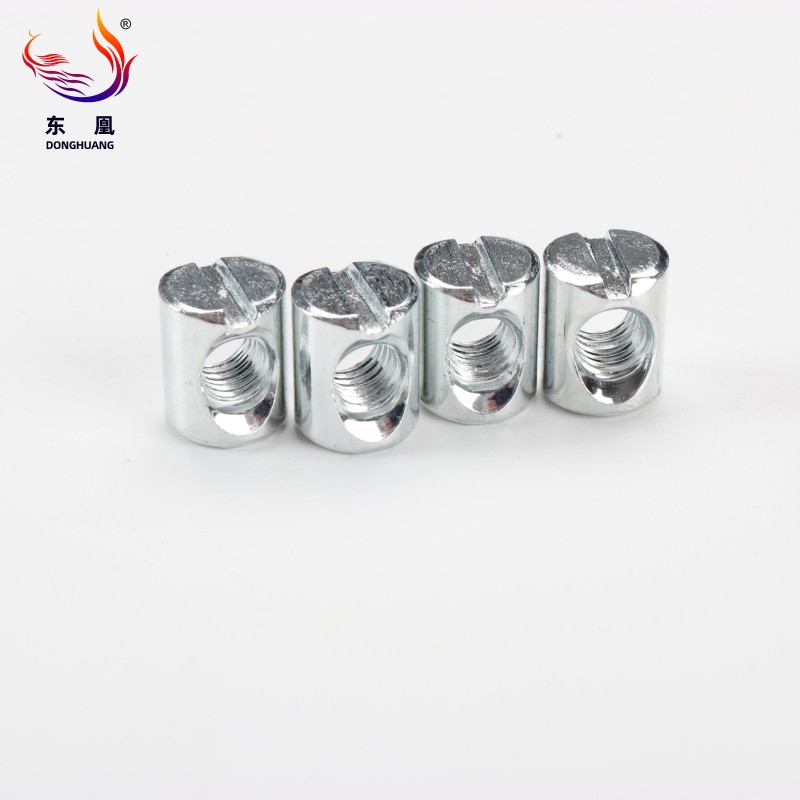
Different industries demand entirely different performance profiles. We categorize these fasteners by their primary application environment. The chart below summarizes the main categories.
| Category | Primary Material | Key Characteristic |
|---|---|---|
| Aerospace | Titanium / Alloy Steel | Extreme vibration resistance |
| Firearm (AR-15) | Hardened Steel | Thermal expansion tolerance |
| Sex Bolts | Stainless Steel / Zinc | Dual-flush tamper resistance |
| Cross Dowels | Brass / Plated Steel | Metal threads in soft materials |
Aerospace engineers design these specific variants for extreme tension limits. The environment includes relentless vibration and rapid pressure changes. Manufacturers typically machine them from titanium alloys. High-grade alloy steels also provide excellent fatigue resistance here. They often feature built-in self-locking mechanisms internally. Nylon inserts create mechanical friction against the bolt threads continuously. Deformed threads physically grip the mating fastener tightly. These features prevent loosening during turbulent flights securely.
Firearm construction relies on highly specialized cylindrical profiles. AR-15 builders use them to secure the barrel tightly. The fastener connects the barrel directly to the upper receiver. The surrounding metal must withstand intense thermal expansion cycles. Extreme shock from repeated firing also stresses the joint heavily. Builders require specialized armorer wrenches during the installation phase. You must hit exact torque specifications perfectly. Proper torque ensures perfect gas tube alignment internally. Over-tightening can warp the upper receiver permanently.
Many people interchange the terms freely in workshops. Mating fasteners often go by the name "sex bolts." They consist of a female threaded cylinder primarily. This barrel features a low-profile head on one end. You pair it alongside a standard machine screw. The design prioritizes consistent clamp load across panels. Builders use them for tamper-resistant applications frequently. They provide a clean, dual-flush finish on partitions. You see them often in restroom stalls or heavy doors.
Cabinetmakers rely heavily on cross dowels daily. These are simple cylindrical metal nuts. You insert them horizontally into wood or composite panels. Wood cannot hold fine machine threads under heavy load. The fibers strip out quickly under tension. A cross dowel solves this frustrating problem easily. It provides strong metal-on-metal threading inside the board. The design prevents the joint from tearing apart under stress.
Selecting the correct hardware requires strict engineering evaluation. You must match physical properties to expected environmental stresses.
Material selection dictates long-term survival in the field. Titanium and stainless steel dominate aerospace and marine sectors. They offer exceptional corrosion resistance naturally. Titanium delivers an unmatched strength-to-weight ratio. Zinc-plated steel suits basic indoor applications well. Brass works perfectly for furniture construction. You should never specify titanium for a basic indoor wooden frame. The material mismatch wastes resources needlessly.
Thread fit determines vibration tolerance directly. Engineers typically evaluate Class 2B versus Class 3B threads. Class 2B provides a standard commercial fit. It offers easy assembly and basic reliability. Class 3B delivers a much tighter tolerance. Aerospace applications strictly require Class 3B fits. The tighter interface prevents internal micro-movements. Micro-movements eventually cause catastrophic joint failure during high-frequency vibration.
Regulated industries demand complete material traceability. You cannot simply trust unverified metal. Aerospace and defense procurement requires DFARS compliance. You must verify exact MIL-SPEC standards physically. Manufacturers must provide Material Test Reports (MTRs). These documents prove the alloy composition matches your specifications perfectly. Lacking proper certification grounds flights and stops assembly lines.
Assembly scalability impacts your production floor directly every day. Consider the chosen drive type carefully before ordering. Hex and Torx drives support automated assembly line tooling efficiently. They resist cam-out under high torque applications well. Slotted drives often require manual, high-skill installation techniques. Automated screwdrivers slip out of slotted heads easily and scratch surfaces. You must align the drive style to your actual manufacturing capabilities.
Theory often clashes against assembly line realities. Blind installations carry specific mechanical risks. You must anticipate these hurdles early.
Galling represents a severe threat to metal joints. Cold welding occurs under extreme friction and pressure. Mating stainless steel hardware together causes this phenomenon frequently. The threads fuse permanently during the installation process. You cannot tighten or loosen the fastener once galled. Always apply proper anti-seize lubrication beforehand. Alternatively, you can use dissimilar metals to prevent fusion entirely.
Blind installation guarantees alignment challenges inherently. You cannot see the threads engaging inside the material. This reality increases the risk of cross-threading dramatically. Cross-threading destroys both the bolt and the internal cylinder. You should utilize alignment jigs during assembly procedures. Chamfered lead-ins on the fastener also help significantly. A chamfer guides the bolt safely into the correct thread path.
Torque management dictates the ultimate structural success of your project. Many novice builders believe tighter always means a safer joint. This assumption is a dangerous common mistake. Over-torquing leads directly to structural failure eventually. It stretches the bolt past its natural yield point. Aluminum frameworks deform permanently under excessive clamping force. Soft-wood cross-dowel applications will crush inward and splinter. You must calculate and strictly stick to defined torque limits always.
Vibrations want to dismantle your work constantly. You must mitigate loosening proactively during assembly. Engineers choose between chemical and mechanical solutions. Chemical threadlockers secure static joints exceptionally well. However, they complicate future maintenance procedures. Mechanical locking features work better for frequent disassembly. Deformed threads or nylon inserts maintain tension mechanically. Base your choice on the necessity of future repairs.
Follow a rigorous sequence when selecting hardware. We use a four-step framework for accurate procurement.
The "right" Barrel Nut depends entirely on your specific engineering context. You must constantly balance strength, weight, cost, and assembly reality. There is no universal solution for every joint. Engineers and buyers should finalize their physical dimensional constraints early. You must understand your compliance needs before engaging manufacturers. Clear specifications prevent costly revisions later. Take immediate action on your next build. Review your structural schematics carefully. Consult detailed supplier specification tables to match dimensions perfectly. Finally, contact a dedicated fastener engineer for custom fabrication quotes if standard catalogs fall short.
A: People often use the terms synonymously. However, a sex bolt typically features a built-in flange or head. You pair it with a mating screw to create flush finishes on both sides of a partition. A standard barrel nut might just be a simple threaded cylinder. A furniture cross dowel is a perfect example of this simpler design.
A: Standard configurations can often see safe reuse. However, self-locking variations lose their holding power. Aerospace grade hardware with deformed threads physically alters during installation. They typically lose their locking efficacy once removed. You should replace self-locking hardware entirely per standard safety guidelines to prevent future joint failure.
A: Galling happens when similar hard metals cold-weld under friction. You must intervene to stop this fusion. We recommend applying appropriate anti-seize compounds before threading. Alternatively, you can specify dissimilar metal coatings or platings on the mating bolt. These coatings reduce surface friction significantly during the final installation sequence.

