
Views: 0 Author: Site Editor Publish Time: 2026-07-08 Origin: Site
Hardware failure isn't just a minor inconvenience during an installation project. It often results in damaged infrastructure, ruined high-value assets like shattered flat-screen displays, and severe potential liability. Many installers mistakenly search for a universally "strongest" wall fastener, but this premise is fundamentally flawed. There is no single anchor built for every scenario. Peak holding strength actually depends on marrying the specific hardware to the right base material, also known as the substrate, while properly accounting for the direction of the load. True holding power requires assessing how downward pull compares to outward pull against your specific wall or floor composition. In this guide, we evaluate how these forces impact hardware selection. You will discover how to match load limits to substrate realities and learn exact methods to keep your installations permanent and safe.
To evaluate fastener strength accurately, you must first define the physical forces at play. A perfectly rated piece of hardware will still fail if you apply the wrong type of force. Establishing strict success criteria means understanding exactly how your mounted object interacts with gravity and leverage. Let us break down the two primary forces you must calculate.
Shear force measures gravity pulling an object straight down, parallel to the mounting surface. Think of a heavy mirror hanging flat against a wall. In this scenario, the wall itself absorbs much of the physical stress. The fastener acts primarily as a pin preventing the object from sliding toward the floor. Because the wall supports the bulk of the pressure, most standard fasteners boast extremely high shear weight ratings. However, you cannot rely on shear ratings alone if your object extends outward.
Tensile force exerts outward pressure perpendicular to the wall. Consider a heavy television mounted on an articulating arm. When you pull the screen away from the wall, the leverage shifts. Gravity now attempts to pry the top fasteners straight out of their holes. Tensile strength represents the maximum outward pull a fastener can withstand before ripping free. This is the exact metric where inadequate hardware fails. Always check the tensile rating for floating shelves, handrails, or movable mounts.
Hardware ratings exist purely in theory until you introduce the substrate. The base material dictates the actual holding power. A heavy-duty lag bolt might hold 1,000 lbs in solid concrete but tear out instantly in soft plaster. For instance, a metal fastener rated for 100 lbs in concrete may only support 15 lbs in half-inch drywall. Success criteria must align the hardware rating strictly with wall material limitations. The weakest link is rarely the metal or plastic; it is almost always the crumbling wall.
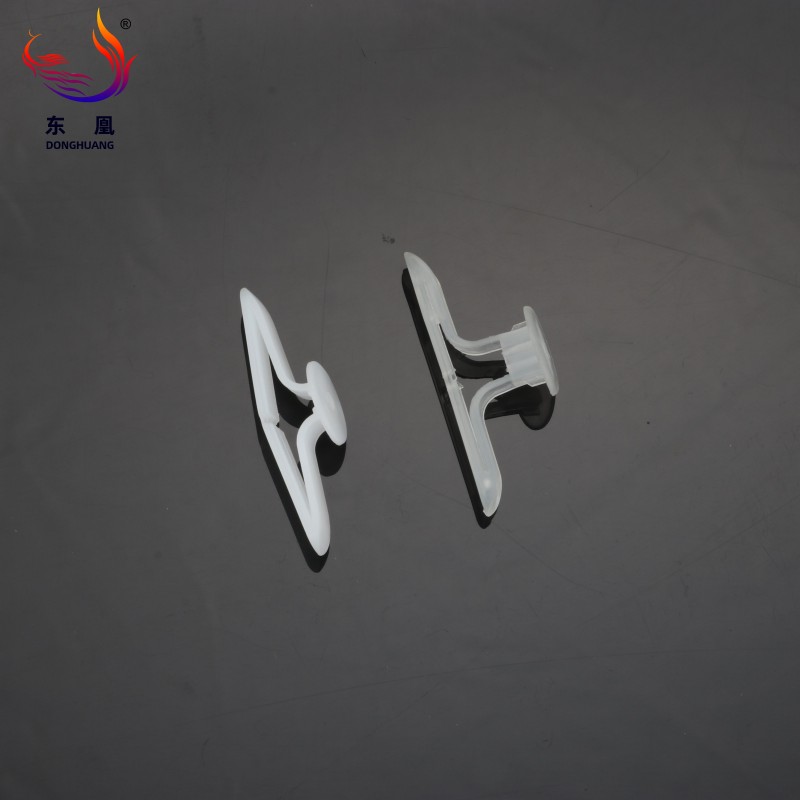
Hollow walls present a unique engineering challenge. You lack a solid mass to grip, meaning traditional expansion techniques fail. You must rely on mechanisms designed to spread the load across the backside of the panel. Let us explore the primary solution categories for hollow applications.
Toggle bolts remain the undisputed champions of sheer holding power in hollow walls. They feature spring-loaded metal wings. You push these wings through a drilled hole. Once inside the wall cavity, the wings snap open. As you tighten the bolt, the wings clamp flat against the hidden back surface of the drywall. This mechanism distributes the object's weight over a significantly wider surface area. However, toggle bolts carry a notable implementation risk. They require a massive pilot hole for the folded wings to pass through. This large hole inherently weakens the immediate surrounding drywall.
Self-drilling fasteners look like oversized screws. You drive them directly into the drywall without pre-drilling. They utilize aggressive, deep threads to bite into the gypsum core. These perform exceptionally well for shear strength applications. A heavy picture frame hangs perfectly on them. However, they perform poorly against tensile pull-out forces. Because they only grip a localized half-inch of gypsum dust and paper, an outward tug easily strips the hole.
Evaluating hollow wall limits requires understanding material failure. There is a distinct point of diminishing returns. Once a load exceeds 50 to 70 lbs on a single point in standard half-inch drywall, the hardware's strength becomes irrelevant. The drywall paper will tear, and the gypsum core will snap long before a steel toggle bolt bends. If your load exceeds this threshold, you must bridge across multiple studs rather than relying on drywall suspension.
| Fastener Type | Primary Mechanism | Shear Strength | Tensile Strength | Substrate Risk |
|---|---|---|---|---|
| Metal Toggle Bolt | Rear clamping | High | High | Large pilot hole weakens wall |
| Self-Drilling | Deep thread grip | Medium | Low | Gypsum strip-out |
| Expanding Plastic Plug | Lateral expansion | Low | Low | Splits brittle drywall paper |
Solid substrates like poured concrete, brick, and block allow for maximum structural load-bearing capabilities. Because the base material is dense and unforgiving, you can utilize aggressive mechanical expansion forces. Below are the elite solution categories for solid applications.
Steel wedge anchors deliver the ultimate holding power for heavy-duty static loads. Engineers use them to secure structural steel beams, heavy machinery, and industrial racking. You insert the wedge into a pre-drilled hole and tighten the nut. As the nut turns, it pulls a tapered mandrel up through an expansion clip. This forces the clip outward, biting aggressively into the concrete walls. They rely entirely on intense mechanical expansion.
Sleeve anchors offer exceptional versatility for solid block, brick, and standard concrete. They function similarly to wedge types but feature a full-length metal sleeve. As you tighten the bolt, the sleeve expands along its entire length. They offer slightly lower peak capacity than wedge types but handle irregular or slightly crumbling substrates much better. They distribute outward pressure more evenly, making them safer for older masonry.
Mechanical expansion is not always the right choice. Chemical anchors represent the strongest choice for dynamic, vibrating, or shifting loads. Instead of pushing outward, you inject a two-part epoxy resin into the hole before inserting a threaded rod. The epoxy flows into the microscopic pores of the concrete. Once cured, the rod bonds seamlessly with the masonry. This method applies absolutely zero expansion stress to the surrounding material.
Mechanical expansion creates immense lateral pressure. You must highlight the danger of placing wedge or sleeve anchors too close to an unsupported edge of a concrete slab. If installed too close to a ledge, the outward expansion force will crack or blow out the concrete. Industry professionals refer to this failure as "spalling." As a general rule, keep expansion hardware away from edges by a distance equal to at least five times the hardware diameter.
While heavy steel mechanisms handle extreme industrial loads, everyday commercial and structural applications require versatile reliability. This is where advanced polymer engineering steps in. Let us evaluate how premium nylon solutions outperform traditional materials.
You must contrast a premium Nylon Anchor against cheap, brittle plastic plugs commonly included in retail kits. Generic plastic plugs dry out, turn brittle, and crack under pressure. In contrast, pure polyamide (nylon) offers incredible material memory and flexibility. It resists extreme temperature fluctuations without shattering during winter installations. Its high friction coefficient ensures it grabs the inner walls of a hole tightly without spinning freely when you drive a screw into it.
A high-quality Nylon Anchor acts as a smart fastener. It adapts its function across multiple substrates. When installed in solid poured concrete, the insertion of a screw forces the nylon body to expand evenly. It presses outward in multiple directions, gripping the dense masonry tightly. However, when installed in a hollow cavity like block or drywall, the mechanism changes. As the screw pulls the tip backward, the nylon body folds, twists, and knots itself behind the panel. This creates a solid, bundled mass that functions just like a metal toggle wing.
Nylon truly shines by supporting medium-to-heavy loads across unpredictable environments. A properly seated professional-grade nylon fastener can securely hold upwards of 100+ lbs in solid concrete and comfortably manage 30 to 50 lbs in drywall. Crucially, its flexible nature absorbs slight vibrations and shifts, mitigating the risk of tearing a fragile substrate over time.
Professional engineers do not guess on load limits. Premium nylon solutions often carry strict technical approvals. For example, many high-end nylon fasteners achieve European Technical Assessment (ETA) ratings for specific load-bearing applications. These rigorous tests prove they are viable for critical commercial and residential use. Generic polyethylene alternatives lack these certifications and belong nowhere near a critical load.
Selecting the correct holding mechanism requires a systematic approach. Guesswork leads to catastrophic failure. Follow this exact four-step decision framework to guarantee your object stays mounted.
| Substrate Type | Load Type | Recommended Solution | Primary Advantage |
|---|---|---|---|
| Solid Concrete | Extreme Static Load | Steel Wedge | Maximum shear/tensile rating |
| Hollow Drywall | Heavy Static Load | Metal Toggle Bolt | Spreads load over large rear area |
| Mixed/Unknown | Medium Dynamic Load | Premium Nylon Fastener | Adapts by expanding or knotting |
| Brick near edges | Vibrating Load | Chemical Epoxy | Zero expansion stress on masonry |
Evaluating fastener strength confirms a fundamental truth: "strength" is entirely contextual. A massive steel bolt is useless in hollow drywall, just as a self-drilling screw fails in concrete. By assessing your substrate composition and separating shear forces from tensile pull, you ensure your project remains structurally sound.
When engineering your final load, keep these actionable steps in mind. First, choose steel wedge anchors for extreme loads in solid concrete. Second, utilize heavy-duty metal toggles for significant hollow-wall installations. Finally, trust premium nylon anchors for versatile, multi-substrate reliability where shear loads remain moderate to heavy. We strongly encourage you to review your specific project specifications, calculate fixture weights accurately, and source your verified hardware grades from a reputable manufacturer.
A: No. Concrete fasteners require a hard, dense boundary to push against. Their mechanical expansion mechanisms will immediately crush the soft gypsum core of drywall, spinning freely and providing zero holding power.
A: Yes. Standard plastic plugs use cheap polyethylene, which hardens, turns brittle, and splits over time. Polyamide (nylon) retains extreme structural memory. It stretches, expands, and resists temperature fluctuations, ensuring long-term holding power without breaking.
A: The industry-standard safety margin is a 4:1 ratio. This means the hardware's ultimate failure rating should be four times the actual applied load. A 25-pound object requires hardware rated for at least 100 pounds of ultimate failure load.
A: An oversized pilot hole eliminates vital friction. The fastener will spin in place rather than expanding. To fix this, you must size up to the next hardware diameter, relocate the hole, or fill the void using an approved chemical epoxy resin.

