
Views: 0 Author: Site Editor Publish Time: 2026-07-03 Origin: Site
Fastener selection strictly dictates the structural integrity, overall weight, and safety of any mechanical assembly. Misapplying a low-profile nut in a tension-loaded joint ranks among the most common causes of catastrophic thread stripping and total joint failure. You must evaluate hardware properly to prevent these engineering disasters. The terminology itself often creates immediate search ambiguity across the industry. The name can describe a structural low-profile nut used heavily in aerospace manufacturing, or it can mean a breakaway security nut utilized for anti-theft applications. This comprehensive guide focuses specifically on structural load-bearing characteristics. We will also briefly address the security variant to eliminate ongoing confusion.
You will learn an evidence-based framework to specify and source the correct fastener for your projects. We evaluate joint load dynamics, physical clearance constraints, and strict industry compliance requirements. Engineers and procurement teams can use these practical insights to navigate complex structural applications confidently.
Engineers design the standard tension nut to carry the full tensile yield strength of a corresponding bolt. They feature full-height thread engagement across their internal diameter. This thread height typically equals or exceeds the total diameter of the mating bolt. We use them primarily in joints where external forces attempt to pull the fastened components apart. The primary load runs directly along the axis of the bolt. Because the full load pulls against the threads, the substantial height ensures the fastener maintains intense clamping pressure without deforming.
Manufacturers engineer the structural Shear Nut specifically for assemblies subjected to perpendicular forces. Industry professionals call this sliding force a shear load. These low-profile fasteners feature a significantly reduced physical height. They typically measure half the thickness of standard tension profiles and contain far fewer internal threads. They function primarily to keep the bolt from falling out of the hole. They do not exist to clamp the joint tightly against high axial pull. They merely secure a bolt acting as a pivot or pin.
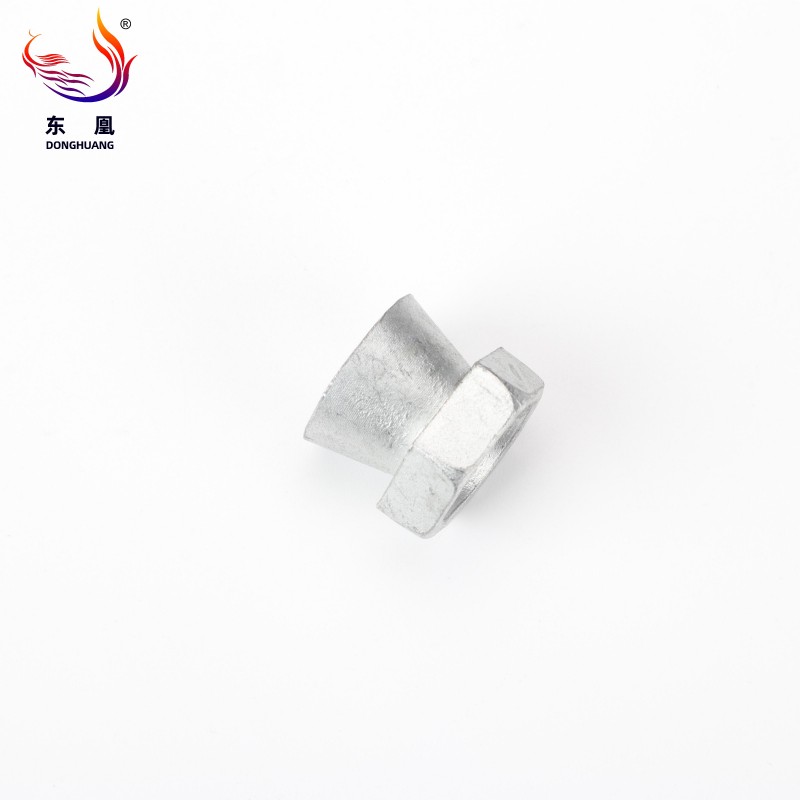
You might also encounter the tamper-proof security variant during your research. Installers tighten this specific fastener until the hex head breaks off completely at a predetermined torque limit. This snapping action leaves behind a smooth, un-grippable conical shape. The name sounds absolutely identical to the structural variant. However, the physical application differs entirely. One manages anti-theft security mechanisms, while the other manages structural load paths. You must distinguish between them clearly during specification.
You must understand the distinct forces acting on your assembly before specifying hardware. Physics dictates how different profiles respond under stress.
Tension joints require high initial preload during assembly. The standard profile must withstand the massive torque required to stretch the bolt effectively. This intentional stretching maintains the critical clamping force keeping the plates together. Shear joints operate under completely different physics. The fastener acts strictly as a mechanical dowel or a stabilizing pin. The unthreaded shank of the bolt carries the actual sliding load. It bears directly against the surrounding plate material. This specific dynamic actively minimizes the axial pull placed on the low-profile nut.
You might wonder why tension applications require so many more internal threads. Load distribution across engaged threads is never perfectly uniform. The first three threads carry the vast majority of the stress burden. You need a specific minimum number of threads to distribute this immense force safely across the metal. Otherwise, the internal threads will literally shear off completely before the bolt itself yields. Low-profile nuts lack this thread count. They will fail catastrophically if exposed to pure tension.
Implementation reality reveals stark differences in installation techniques. Low-profile Shear Nut hardware requires significantly lower torque values during assembly. You cannot torque them to the same robust specifications as standard profiles of the exact same diameter. Applying maximum torque to a half-height profile guarantees stripped threads.
The chart below summarizes the physical dynamics between the two joint types:
| Joint Characteristic | Tension Joint Application | Shear Joint Application |
|---|---|---|
| Primary Force Direction | Axial (Pulling apart) | Transverse (Sliding/Perpendicular) |
| Required Fastener Profile | Full-height standard nut | Low-profile half-height nut |
| Bolt Function | Acts as a clamping spring | Acts as a locating dowel or pin |
| Installation Torque | High (to stretch the bolt) | Low (to secure the pin) |
Different industries leverage these distinct fastener profiles to solve very specific engineering problems. Understanding these scenarios helps you optimize your own assemblies.
Aircraft manufacturing relies heavily on rigid, uncompromising standards. Aerospace engineers constantly evaluate using low-profile options like the AN364 series against standard options like the AN365 series. Success in this specialized field requires maximizing the fundamental strength-to-weight ratio. Every single ounce matters in aerospace structural design. This reality makes low-profile hardware optimal for control surface hinges, landing gear linkages, and clevis pin applications. The transverse forces push sideways on the bolt shank, allowing the aircraft to save critical weight on the fastening hardware.
Heavy machinery environments present a completely different set of challenges. These robust industrial systems often rely on massive standard profiles for their primary clamping power. Engineers utilize the low-profile variants strictly as secondary jam nuts in these scenarios. They thread the thinner profile on top of the primary hardware to lock it firmly in place against extreme vibration. This standard practice proves highly effective in clearance-restricted areas across structural steel frameworks.
Modern product engineering often forces mechanical assemblies into increasingly compact spaces. You must assess severe packaging trade-offs during the design phase. Sometimes a full-height tension profile physically will not fit inside the designated housing or bracket. You must then re-evaluate the primary joint design. If you cannot convert the load path to a transverse orientation, you must redesign the housing to accommodate the taller hardware safely.
You need a systematic approach to eliminate guesswork. Follow these structural evaluation steps to guarantee safe hardware selection.
You must actively monitor for the following common engineering failures:
To further assist your evaluation, consult the physical constraint table below:
| Evaluation Metric | Standard Tension Nut | Structural Low-Profile Nut |
|---|---|---|
| Thread Engagement Length | ≥ 1.0x Bolt Diameter | ≤ 0.5x Bolt Diameter |
| Weight Impact | Heavier (baseline standard) | Lighter (up to 50% reduction) |
| Vibration Susceptibility | Lower (due to high friction preload) | Higher (requires secondary locking) |
| Clearance Requirement | Requires deep pockets/clearance | Fits tight, compact envelopes |
Specification is only half the battle. You must source the exact components reliably to maintain structural integrity.
Untraceable fasteners introduce immense catastrophic liability into your supply chain. You must emphasize the absolute necessity of clear specification matching. Always source hardware certified to recognized standards like ASTM, NAS, or MIL-SPEC. Missing documentation means you simply cannot verify the metallurgical integrity of the joint. Traceability ensures every single batch meets the exact tensile strength requirements printed on the engineering blueprints.
Procurement teams must apply strict shortlisting criteria when selecting hardware vendors. Do your suppliers provide comprehensive mill test reports (MTRs)? Do they truly understand the specific torque-tension yield parameters of the physical hardware they sell? They should offer deep technical support, accurate lot tracking, and robust quality control systems. Avoid vendors who treat specialized structural hardware as generic bulk commodities.
Standard tension hardware remains highly commoditized across global manufacturing markets. Conversely, aerospace-grade structural components often carry a premium due to their strict testing tolerances and specialized machining. You should always base purchasing decisions strictly on exact engineering drawings. Never base critical structural choices on isolated unit costs. Scalability requires predictable, documented performance across thousands of successful installations.
Your fastener choice fundamentally dictates the survival of the mechanical assembly. You should consistently choose full-height tension hardware for high-clamp, pull-force applications. Specify structural low-profile hardware strictly to save critical weight and space in transverse-load joints where the bolt acts merely as a pin.
Never substitute a low-profile variant for a full-height tension profile without securing a formal sign-off from a qualified mechanical or structural engineer. Incorrect substitution invites immediate structural failure. When in doubt regarding the load path or the operating environment, always defer to the heavier, stronger tension profile to ensure total safety.
A: Yes. It is structurally very safe to use a standard full-height profile in a transverse load joint. However, doing so adds unnecessary weight, increases overall clearance height, and requires more space. Engineers usually avoid this in weight-critical applications.
A: Yes. Industry professionals frequently use low-profile variants as secondary jam nuts. You thread the thinner profile firmly against a primary full-height profile to lock it securely in place, preventing vibration-induced loosening.
A: You most likely over-torqued it. Low-profile variants contain fewer threads and require roughly half the installation torque of a standard tension profile. Applying standard torque chart values will instantly strip the internal threads.
A: It is a specialized security fastener designed to permanently lock a joint. It features a hexagonal driving head that intentionally snaps off at a specific torque limit, leaving a smooth cone. This mechanism is completely unrelated to structural shear-loading applications.

