
A Shear Nut, often called a breakaway nut, acts as a highly specialized, permanent security fastener. Engineers design them specifically to prevent unauthorized removal and stop intentional tampering. Standard nuts remain highly vulnerable to everyday hand tools. Even conventional locking inserts fail against a determined physical attack. Critical infrastructure, public utilities, and high-security installations face unique threats daily. They demand a robust fastening solution. Planners must intentionally sacrifice future maintenance access to achieve maximum asset protection. Recognizing this trade-off is the foundation of high-level site security.
Specifying this component requires a deep understanding of its irreversible mechanical action. You must evaluate specific material constraints and highly precise torque ratings carefully. Professionals ensure these factors align perfectly against strict project security demands. They must also meet rigorous regulatory compliance requirements to prevent structural failures. Navigating these parameters ensures your security installation remains permanently secure.
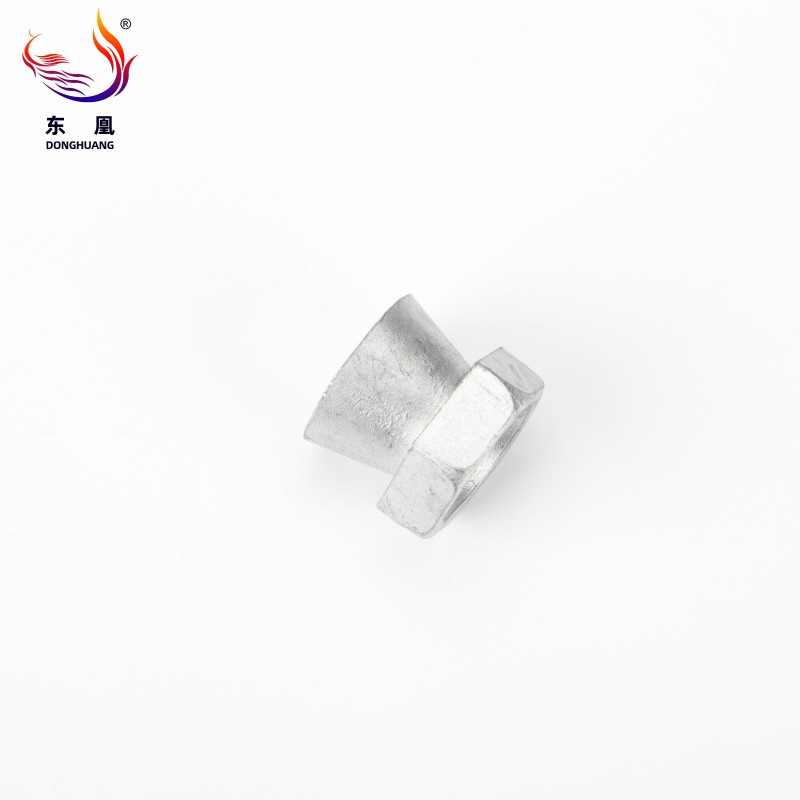
Understanding the physical structure is crucial. The fastener consists of two distinct sections joined by a precisely machined groove. The top section is an unthreaded hexagonal gripping area. Installers use this section to drive the fastener down the bolt. The bottom section forms a threaded conical or dome-shaped base. This base provides the actual clamping force against the substrate. The deliberate separation of driving mechanics and securing mechanics gives this hardware its unique tamper-proof capabilities.
The installation relies on basic physics and intentional material failure. As torque is applied to the hex head, the fastener travels down the threads. Resistance increases once the conical base contacts the substrate surface. The shear groove experiences massive localized stress. This groove acts as a deliberate weak point in the design. It prevents over-tightening while simultaneously activating the security feature. Applying continuous rotational force eventually overcomes the tensile strength of the metal at this specific groove.
Manufacturers calibrate the breakaway point during fabrication. Factory engineers calculate the exact wall thickness needed for the shear groove. Once the required clamping force is achieved, the hex head shears off instantly. This calibration ensures you achieve adequate joint tension before the break occurs. Relying on this engineered threshold removes the guesswork from installation. It acts as an automatic mechanical torque limiter. You always achieve consistent clamping loads across multiple installations.
The aftermath of the shearing process defines the security value. The hex head detaches completely. Only the smooth, threaded conical base remains attached to the bolt. This resulting profile offers zero flat surfaces. Pliers, grips, and standard spanners have no surface to purchase. Vice grips slide off the sloped exterior harmlessly. You successfully eliminate the driving mechanism entirely. The joint transforms into a permanent, tamper-proof connection.
Different sectors leverage this permanent fastening technology to solve unique security challenges. The inability to reverse the installation makes it ideal for high-risk environments.
Engineers often debate between permanence and adjustability. Contrast the permanent security of a breakaway nut against the reversible nature of a nyloc nut. A nylon insert provides excellent vibration resistance. The nylon collar grips the bolt threads tightly. However, anyone possessing a standard wrench can remove a nyloc nut easily. A Shear Nut delivers permanent security. It physically alters its shape to deny tool access entirely.
Pin Torx and similar tamper-resistant designs offer a different security model. Highlight the fact they allow authorized maintenance access. Technicians carrying specialized tools can remove and replace them. While highly secure against casual vandals, they remain vulnerable to organized criminals carrying security bit sets. A breakaway nut provides absolute zero-access security. Once installed, no specialized bit exists to reverse the process.
Making the correct specification choice requires analyzing your lifecycle needs. Use the following framework to guide your decision-making process.
The table below summarizes these operational differences clearly.
| Fastener Type | Security Level | Vibration Resistance | Best Application Scenario |
|---|---|---|---|
| Breakaway Nut | Maximum (Permanent) | High | Perimeter fencing, utility infrastructure |
| Nylon Insert Lock Nut | Low (Reversible) | Very High | Vibrating machinery requiring maintenance |
| Pin Torx / Security Nut | Medium (Controlled Access) | Moderate | Electronics enclosures needing authorized repair |
Environmental exposure strictly dictates your material selection. Choosing the wrong alloy compromises the entire security perimeter. Rust degrades the conical base, eventually allowing vandals to snap it off using brute force.
Sizing parameters require exact matching. Note their availability in both metric (spanning M4 to M24) and standard imperial sizing. Emphasize the critical need to match the thread pitch exactly to the underlying bolt. Mismatching pitches causes severe binding. Binding forces the hex head to shear prematurely before reaching the target clamping load. You must verify thread compatibility during the procurement phase.
Engineers must address standard load and torque thresholds rigorously. Address the relationship between the shear torque and the substrate material. Engineers must verify the shear torque of the nut never exceeds the yield strength of the joined materials. If the breakaway threshold is 50 Nm, but the underlying bolt snaps at 40 Nm, the design fails. You must calculate these load limits accurately to maintain compliance with structural safety codes.
Operational simplicity remains a major advantage. Highlight the reality: no specialized tools are required for installation. Field technicians only need standard sockets, ring spanners, or wrenches. The intelligent design exists entirely within the fastener itself. This reduces equipment overhead for installation crews. They can secure massive perimeters using standard toolkits found in any hardware store.
Installation mistakes carry heavy consequences. Warn your crews against misalignment heavily. If a Shear Nut binds due to cross-threading, applying additional force snaps the head prematurely. This ruins the fastener instantly. It leaves a loose, un-clamped joint. You cannot tighten it further because the hex head is gone. You cannot remove it easily because the conical base remains locked onto the crossed threads.
Material compatibility goes beyond corrosion. Detail the extreme risk of crushing softer materials. Plastics, fiberglass, or thin sheet metal present specific challenges. If the breakaway torque is higher than the material's compressive strength, the substrate fails first. The nut crushes the plastic enclosure before the hex head snaps. You must distribute the clamping force using thick, hardened washers to prevent this crushing effect.
Mistakes happen during field installations. Objectively explain the harsh reality of removing a permanent fastener. Detail the engineering realities of removal. Technicians must use destructive methods. Drilling out the underlying bolt remains the most common solution. Sometimes, they use a heavy-duty nut splitter to crack the conical base. Alternatively, skilled welders can weld a new standard nut directly to the smooth cone to back it off. Emphasize the highly labor-intensive reality of these errors.
Selecting the right component requires analytical mapping. Guide the buyer through this precise matching process. You must map your required clamping force directly to the manufacturer's stated breakaway torque. Ensure the activation threshold provides enough tension to hold the joint secure. Too much torque damages the assembly. Too little torque leaves the joint loose. Consult engineering tables to find the perfect intersection of tension and breakaway force.
Procurement demands strict quality control. Advise your purchasing department to evaluate suppliers critically. Look for suppliers providing crystal-clear technical data sheets. Demand full traceability for every batch. Require official material certifications before purchasing. Verifying genuine A4 stainless steel prevents catastrophic corrosion failures down the line. Inferior alloys disguised as premium stainless compromise your entire security perimeter.
Theory must translate into physical testing. Recommend ordering a small sample batch initially. Perform physical torque testing on the actual substrate materials. Validate the breakaway point using your exact bolts and washers. Confirm the conical base sits flush without crushing the underlying surface. This physical validation prevents massive failures before authorizing a full-scale field rollout.
Deploying breakaway fasteners fundamentally changes your security posture. Here are the core actions to take forward:
A: Not without destructive methods like drilling, using nut splitters, or utilizing specialized heavy-duty extraction tools. They are intentionally designed to be permanent. Standard hand tools cannot grip the smooth conical base left behind after installation.
A: No. The installation process fundamentally destroys the driving mechanism of the nut. Once the hexagonal head snaps off at the engineered torque limit, the fastener cannot be reused or reinstalled elsewhere.
A: A shear nut threads onto an existing separate stud or bolt. Conversely, a shear bolt features the breakaway hexagonal head integrated directly into the bolt shank itself, acting as a single cohesive unit.
A: No, the nut itself acts as a mechanical torque limiter by snapping at its engineered threshold. Standard installation tools work perfectly, though technicians must still follow basic installation best practices to avoid cross-threading.

