
Views: 0 Author: Site Editor Publish Time: 2026-07-02 Origin: Site
Framing systems demand reliable hardware to maintain structural integrity. Installers often default to highly familiar choices on the job site. Traditional spring-loaded components completely dominate Unistrut and standard strut channel framing. However, this industry-standard status masks significant real-world installation friction. Crews routinely fight tangled springs when grabbing handfuls from bulk storage boxes. They also encounter mismatched lengths when dealing across varying channel depths. Furthermore, exterior damp environments cause rapid wire rust before the main structural elements even show wear. You need better fastening solutions. This guide delivers an evidence-based breakdown of viable alternatives. We evaluate these options against specific load requirements and intense vibration conditions. You will discover practical ways to reduce labor-time bottlenecks without sacrificing overall safety. Read on to find out exactly which fastener fits your specific structural application.
Relying exclusively on traditional hardware introduces hidden inefficiencies to your projects. Structural components should simplify assembly processes, not complicate them. We see four major limitations when evaluating standard spring-loaded fasteners in the field.
Time spent untangling components directly harms hourly labor efficiency. Imagine reaching into a bulk box while standing on a scissor lift. Five pieces come out hooked together. You shake them. They stay stubbornly stuck. Installers waste valuable minutes untangling these wires daily. Multiply this lost time across hundreds of connection points. Hourly labor rates add up quickly on large-scale electrical runs or massive HVAC installations. You lose significant productivity before the actual installation even begins.
Standard strut channels vary significantly in depth. Shallow profiles measure exactly 13/16 inches. Deep profiles reach 1-5/8 inches. Using a long-wire component inside a shallow channel causes severe problems. The wire bottoms out against the back wall. This physical blockage prevents proper thread engagement. A loose connection creates immediate structural hazards. Installers must then sort through bins to find the exact matching length. This sorting process creates unnecessary delays on busy sites.
Galvanized steel resists exterior corrosion well. However, the attached retaining wire uses much thinner gauge metal. This thin wire oxidizes rapidly. Damp environments accelerate this rust formation. Exterior HVAC mounts suffer from this degradation heavily. The wire completely rusts away over time. It leaves corrosive residue inside the channel bed. Even when the main body remains structurally sound, the degraded wire compromises visual inspections and long-term integrity.
Many framing projects involve simple static floor mounts. These low-load frames never experience high vibration. Specifying heavy-duty, vibration-resistant hardware wastes valuable resources here. Simpler fasteners handle these basic structural loads perfectly. Stop over-engineering simple static frames. You can safely utilize faster, streamlined alternatives in low-impact zones.
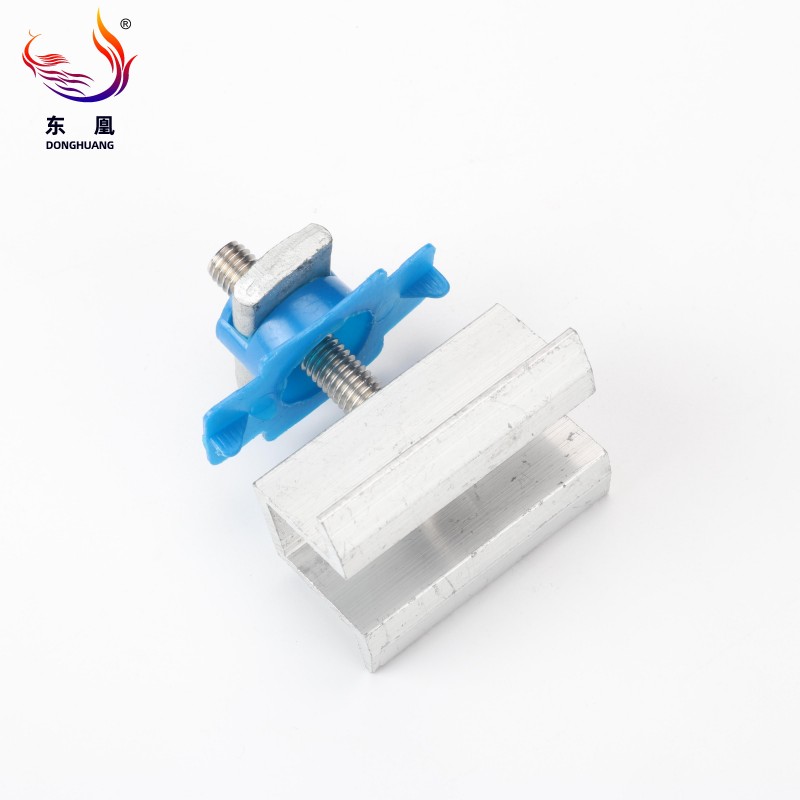
Replacing traditional hardware requires understanding the available mechanical variations. Each alternative solves specific field challenges. We will examine the top three replacement options for strut channels. You must weigh the distinct mechanisms, advantages, and trade-offs for each type.
Mechanism: This option completely replaces the metal wire. It uses a pliable nylon cone instead. The cone wedges tightly into the channel lips. It provides necessary tension to hold the component in place.
Advantage: You experience absolutely zero tangling in bulk storage. Workers can grab handfuls quickly. It also accommodates multiple channel depths effortlessly. You do not need to stock distinct size variations.
Trade-off: Nylon materials can degrade over time. Extreme high-temp environments melt the plastic. Prolonged UV exposure also weakens the cone. They require careful environmental consideration before installation.
Best Practice: Always store cone versions out of direct sunlight before deployment.
Mechanism: This is a flat, grooved piece of hardware. It features no retaining mechanism whatsoever. The installer must manually hold it in place until the bolt engages the threads.
Advantage: These carry the absolute lowest unit cost. They are highly optimal for horizontal, floor-level strut runs. Gravity naturally assists placement. You just drop them in and tighten.
Trade-off: They present a very high drop risk during overhead work. Manual holding causes massive labor drag during vertical drop installations. Installers frequently drop them from ladders.
Mechanism: This design features a top-mounted retaining clip. It abandons the bottom wire approach entirely. The clip grips the internal lips of the channel.
Advantage: This allows true "roll-in" installation. You can insert them anywhere along the channel track. You do not have to thread them blindly from the open end.
Trade-off: They generally carry a higher unit cost. They also display slightly lower slip-resistance ratings depending on the specific manufacturer. You must check the load charts.
Standard strut systems serve heavy construction well. However, lighter applications require completely different hardware ecosystems. T-slot hardware dominates these lighter setups. You must understand the context and performance limits of this cross-industry alternative.
We must shift our focus to specialized builds. The 80/20 aluminum extrusion market relies heavily on T-slot hardware. Automotive enthusiasts also use them for cargo rail modifications. Tacoma truck bed racks frequently utilize these smaller fasteners. They provide excellent flexibility for custom fabrication. Machine guards and lightweight framing highly depend on this ecosystem.
You can choose between two main insertion methods for aluminum extrusions. Each serves a different workflow stage.
T-slot nuts are engineered strictly for fractional or metric aluminum profiles. They are not meant for standard heavy-duty steel strut framing. Their geometric shape differs completely. Mixing these hardware ecosystems severely compromises structural shear strength. It also instantly nullifies published load ratings. Standardized steel channels feature curled lips. T-slot hardware lacks the width and serrations to safely grip those steel curls.
Common Mistake: Never force an aluminum-profile T-nut into a structural steel ceiling grid. The connection will fail under minimal load.
Switching fasteners changes how your overall system performs. You cannot evaluate alternatives based on unit price alone. We must analyze labor time, vibration resistance, and chemical compatibility. This comprehensive evaluation ensures long-term structural success.
Assess whether the pennies saved on springless hardware are actually worth the effort. Saving money on plain hardware feels smart initially. However, those savings vanish rapidly during overhead installation. Seconds lost fumbling hardware turn into hours of wasted labor. The matrix heavily favors self-retaining options (like cone varieties) for vertical and overhead runs. Save the plain varieties strictly for floor work.
Industrial settings generate constant movement. High-vibration environments exist near heavy HVAC units or large backup generators. In these zones, the retaining wire does not provide structural strength. The overall clamping force is dictated entirely by the nut's grooves and final bolt torque. Alternatives must feature identical serrated grooves to maintain seismic compliance. Engineers require strict MFMA-4 compliance for any substituted hardware in seismic bracing. If the alternative lacks deep serrations, it will slip.
Mixed metals create chemical reactions. You must prevent galvanic corrosion on site. Ensure the alternative material matches the strut channel perfectly. Common finishes include Zinc-plated, Hot-Dipped Galvanized (HDG), or 316 Stainless Steel. Placing a bare zinc piece inside an HDG channel invites rapid corrosion. Always match the hardware finish to the framing finish.
Review the chart below to understand how these alternatives stack up against each other.
| Hardware Type | Labor Speed (Overhead) | Vibration Resistance | Best Use Case |
|---|---|---|---|
| Cone Nuts | Very Fast | High (Matches Standard) | Multi-depth commercial installations |
| Standard Strut Nuts | Slow (High drop risk) | High (Matches Standard) | Bulk horizontal floor mounting |
| Top-Spring / Squeeze | Fast | Moderate to High | Retrofit channel installations |
| T-Slot Nuts | Fast (In Aluminum) | Low (Do not use in steel) | 80/20 aluminum profiles |
Modifying your standard materials list introduces specific project risks. Field crews depend on predictable hardware. Changing the established standard requires strict oversight. You must manage compliance, torque specifications, and site standardization effectively.
Swapping hardware on structural or seismic bracing requires engineering approval. You must verify the alternative meets original engineering submittal standards. Inspectors will look for MFMA-4 compliance marks. If your selected alternative fails this inspection, you face massive rework. Always submit cut sheets for approval before bulk ordering new hardware styles.
Different retaining mechanisms alter the perceived tightening resistance. Nylon cones compress as you tighten the bolt. This compression feels different to an experienced installer. They might over-tighten the connection instinctively. Installers must adhere strictly to specified torque values. Using a calibrated torque wrench prevents thread stripping. Do not rely on "feel" when transitioning to a new hardware style.
Mixing traditional components, cone varieties, and plain hardware on a single job site causes confusion. It drastically increases the risk of incorrect application by field crews. They might grab a plain piece for an overhead seismic brace by mistake. You must standardize your selections. Choose one specific alternative for overhead work and one for floor work. Color-code the storage bins to prevent cross-contamination.
Optimizing your framing hardware requires analyzing your specific job site needs. You can eliminate tangling, reduce material costs, or adapt to lightweight extrusion profiles. The key lies in matching the fastener mechanism directly to the installation environment.
Audit your current labor bottlenecks immediately. Request physical samples of cone and top-spring variations for field testing. Provide these samples to your lead installers for honest feedback. Finally, always verify pull-out strength documentation against structural requirements before initiating any bulk procurement.
A: Yes. The load-bearing capacity and pull-out strength rely entirely on the steel body and serrated teeth. These teeth engage the strut lips directly. The clamping force does not depend on the nylon cone or metal retaining wire. Once properly torqued, they perform identically.
A: No. T-slot nuts are geometrically designed exclusively for aluminum extrusion profiles. They lack the necessary width and deep serrations to safely grip the curled lips of standardized steel strut channels. Using them in steel channels creates severe structural hazards.
A: Yes. Assuming they were not over-torqued past their yield point, they remain fully reusable. You must also verify they were not subjected to severe corrosive damage. If the threads and serrations remain intact, springless hardware can be loosened and repositioned safely multiple times.

