
Views: 0 Author: Site Editor Publish Time: 2026-06-26 Origin: Site
Engineers face a constant struggle when designing load-bearing joints in fragile substrates. Fastening components securely often becomes a frustrating bottleneck in modern manufacturing. Traditional methods simply fall short when you encounter restricted access areas.
Securing strong threads in thin sheet metal, plastics, or closed tubular structures presents a major engineering challenge. Tapped threads easily strip out of thin materials. Meanwhile, weld nuts distort sensitive surfaces and force extensive post-process rework. You need a reliable, repeatable solution.
We will explore how Rivet Nuts serve as the ultimate standardized alternative to solve these assembly issues. This guide evaluates their technical and operational advantages alongside real-world implementation risks. You will learn how to choose the correct fastener variations. You will also discover actionable strategies to prevent common pitfalls on the production line.
Manufacturers quickly discover the failure points of traditional fastening methods. Tapping threads directly into thin sheet metal rarely succeeds. Materials thinner than .030 inches lack the necessary mass to hold a conventional thread profile. When you apply torque, the tapped threads tear out immediately. Standard nuts and bolts present another massive hurdle. They require two-sided access. If you design a closed geometric profile, an operator cannot reach inside to hold a standard backing nut.
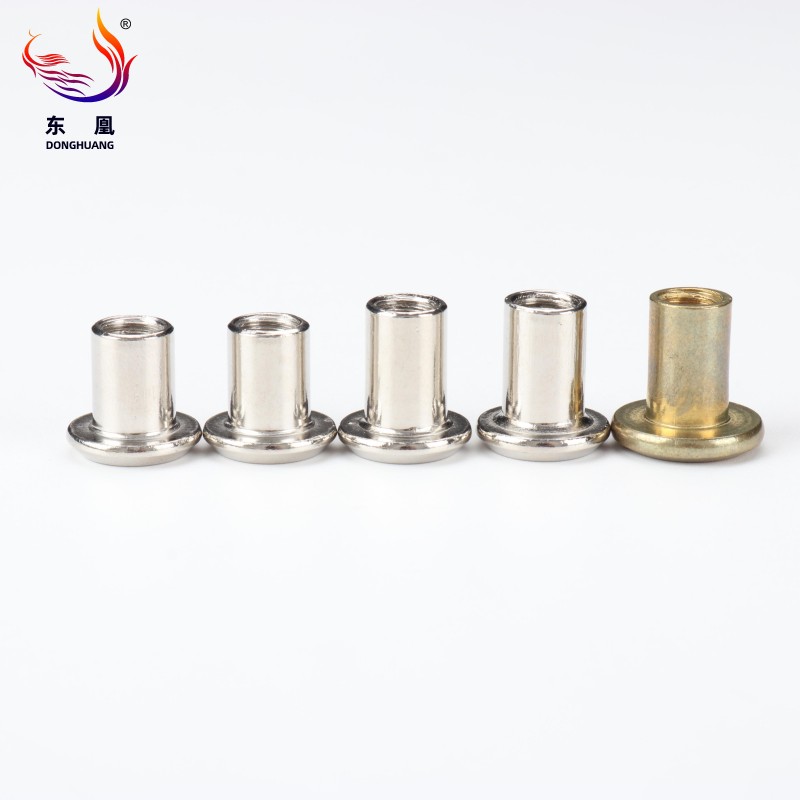
These specialized inserts bypass material thickness limitations entirely. An operator places the insert into a pre-drilled hole. The installation tool engages the internal threads and pulls the insert body upward. This pulling action forces the unthreaded portion of the shank to collapse outward. The collapsed section forms a permanent mechanical flange tightly against the blind side of the parent material. The parent material is then securely clamped between the visible head and the collapsed flange. The fastener does not rely on the host material's thickness for thread strength. Instead, the insert itself bears the entire structural load.
These fasteners dominate several major industrial sectors. Engineers specify them when standard hardware fails to meet operational demands.
Single-sided access fundamentally changes production workflows. You no longer need to design access panels purely for assembly purposes. "Blind" installation allows operators to secure components from the exterior. This capability proves invaluable for threading into closed profiles. Imagine trying to install a thread into a long piece of square tubing. Internal wrenches cannot reach the center. Rivet Nuts solve this instantly. The operator completes the entire installation from the outside face. This streamlines the assembly sequence immensely.
Welding generates intense, localized heat. This heat frequently warps thin-gauge steel. It also burns through sensitive materials like aluminum. These fasteners generate absolutely no heat. You avoid metallurgical changes in the parent substrate completely. From practical experience, surface preservation is a massive advantage. You can install them directly into pre-painted, galvanized, or powder-coated components. The mechanical collapse does not damage the finished surface. This eliminates expensive secondary rework entirely.
Mechanical engineering standards dictate minimum thread engagements for safe load capacities. Thin sheet metal never meets these minimums. The integrated insert body bypasses this rule. The fastener itself contains precisely engineered threads. It acts as an independent anchor point. When you install it, you essentially graft a heavy-duty threaded block into a fragile sheet. This provides superior pull-out and torque-out resistance.
Modern designs frequently mix metals, plastics, and composites. Welding steel to carbon fiber is physically impossible. Tapping fiberglass often shatters the substrate. You can safely install a steel or stainless steel thread into plastic or fiberglass using these fasteners. The collapse mechanism distributes the clamping force evenly. It secures the thread without melting or cracking the delicate base material.
Throughput defines production success. A pneumatic spin-pull tool operates incredibly fast. An experienced operator can install an insert in roughly three seconds. Compare this cycle time to spot or projection welding. Welding requires positioning the part, executing the weld, and allowing for cooldown time. The pneumatic approach drastically outpaces the welding setup phase alone.
Labor dynamics heavily influence engineering choices. Welding demands certified operators. Facilities must provide fume extraction systems and specialized PPE to meet OSHA standards. Finding and retaining skilled welders remains difficult. Alternatively, setting a mechanical insert relies on repeatable, semi-automated tooling. New operators require minimal training. They can achieve perfectly consistent installations on their first day.
Engineers often overlook the secondary labor hidden in welding processes. Weld spatter adheres to surrounding surfaces. Workers must grind or chip this spatter away. Slag frequently clogs the internal threads of weld nuts. Someone must manually run a tap through every clogged nut before final assembly. These fasteners eliminate spatter cleanup. They eliminate thread re-tapping. They eliminate the need to repaint heat-damaged areas.
We must maintain a balanced view of fastening technology. Heavy-duty structural joints subjected to extreme sheer forces demand specific solutions. If the base material possesses sufficient thickness, weld nuts may still prove superior. A properly executed weld fuses the nut directly to the heavy plate. This creates an unyielding bond for high-stress agricultural or earth-moving equipment.
| Evaluation Criteria | Mechanical Insert Method | Weld Nut Method |
|---|---|---|
| Cycle Time | Fast (3-5 seconds per unit) | Slow (Requires setup, weld, and cooldown) |
| Operator Skill Required | Low (Semi-automated tools) | High (Certified welders needed) |
| Surface Damage | None (Safe for painted parts) | High (Heat distortion and burn-through) |
| Post-Process Rework | None | High (Spatter removal, thread cleaning) |
| Maximum Shear Strength | Moderate | Very High (Fused directly to thick plates) |
Choosing the correct body type prevents catastrophic failures later. When a bolt seizes, an improperly specified insert can spin freely inside the hole.
| Body Type | Spin-Out Resistance | Hole Preparation | Best Substrate |
|---|---|---|---|
| Round Smooth | Low to Moderate | Standard Drilled Hole | Hard Steels |
| Splined / Ribbed | Moderate to High | Standard Drilled Hole | Aluminum / Plastics |
| Hexagonal | Maximum | Punched Hex Hole | High-Torque Joints |
The visible head determines the final mating surface profile. A flat head offers maximum push-out strength. It provides a large load-bearing surface. However, it leaves a slight raised profile on the material. If your assembly requires completely flush mating components, choose a reduced or countersunk head. These profiles drop neatly into countersunk holes. They allow secondary brackets to sit perfectly flat against the parent material.
You must match your fastener material to your substrate. Ignoring this rule invites galvanic corrosion. When you introduce dissimilar metals in a humid environment, the less noble metal corrodes rapidly. Always use aluminum Rivet Nuts for aluminum sheet metal. Use stainless steel inserts for stainless panels. Proper material matching ensures structural longevity and prevents unsightly rust bleeds on your product.
The actual advantages of these fasteners depend highly on your chosen tooling. A poor tool guarantees a poor installation. We can categorize the ecosystem into three tiers. Manual hand tools work well for prototyping or low-volume repairs. Pneumatic spin-pull tools serve as the backbone of high-volume production. They automate the thread engagement and pulling process. Battery-operated tools offer mobility. Field service technicians rely on battery tools for remote structural repairs.
Experience reveals two major pitfalls during implementation. Spin-out remains the primary engineer complaint. If an installer drills a sloppy, oversized hole, a smooth-body insert will spin. You must mitigate this through strict hole tolerance control. Adopt hex bodies wherever torque demands remain consistently high.
Under-setting or over-setting presents the second major risk. If you under-set the fastener, the mechanical flange remains loose. The component will rattle. If you over-set it, you risk stripping the internal threads entirely. You must properly calibrate your tools to the specific material grip range. The tool must pull exactly enough stroke to collapse the flange without crushing the threads.
Never integrate a new fastening system blindly into a live production line. We recommend conducting a pilot test first. Gather scrap substrate from your actual production run. Use a pneumatic tool to install several samples. Verify your expected cycle times. Perform destructive pull-out and torque-out testing. This validation phase guarantees that your chosen grip range and body style match your engineering requirements.
A: They offer immense strength but behave differently under load. Weld nuts fuse to the metal, offering maximum shear strength on thick plates. Mechanical inserts rely on the parent material's strength. Usually, the parent sheet metal will tear or fail before the fastener's internal threads strip or pull out.
A: Extraction requires basic machining. You carefully drill through the top flange using a drill bit matched to the internal thread size. Once the flange separates from the body, you use a punch to tap the remaining shank through the back of the hole.
A: Yes, they perform exceptionally well in soft materials. You must utilize specific variations, such as jack nuts or aggressively ribbed bodies. These designs collapse wider, spreading the clamping load over a larger surface area to prevent crushing the plastic or splitting the wood.
A: Yes, tight tolerances are absolutely critical. If the hole is even slightly oversized, the insert lacks the friction required to stay stationary. It will spin when you apply torque. Precise hole preparation ensures proper flange collapse and maximizes rotational resistance.

